What to Know About Milia
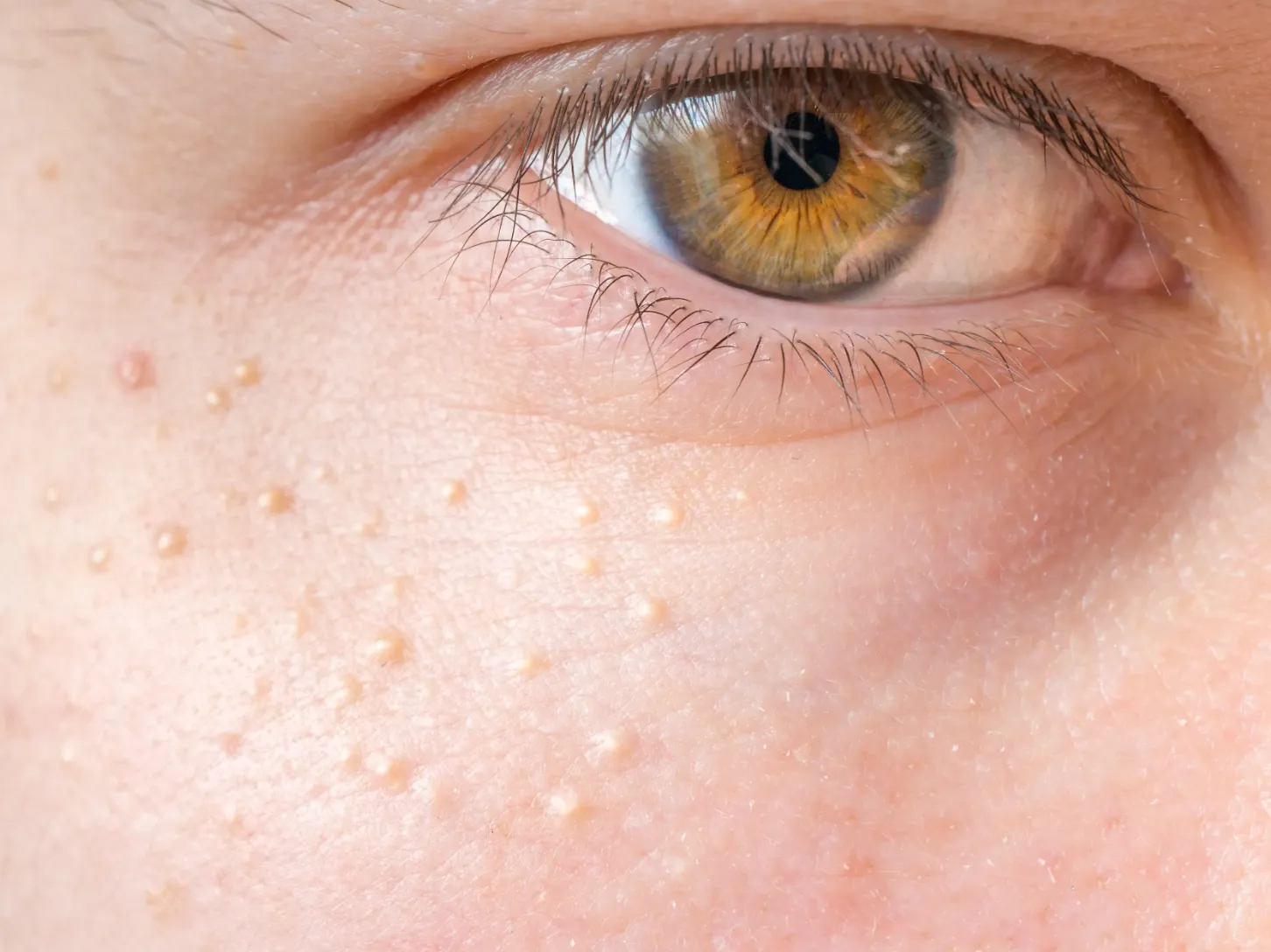
Has Milia ever been mentioned to you? It is widespread and affects all ages, from babies to older adults. It is a condition where tiny, white bumps appear on the skin. There are many different treatments and types of skin conditions available.
Children and adults are usually affected by milia, which is asymptomatic. In the United States, up to 50% of babies develop milia. They appear as small skin bumps (lesions) that range from pale yellow to pearly white.
Adults can also develop primary milia. This form usually occurs around the eye and nose region. In different blistering conditions or after dermabrasion, secondary milia can be seen. Milia are small epidermoid fibrocystic that may develop from the pilosebaceous hair follicle.
There are many causes for concern.
The primary milia are caused by underdeveloped sebaceous ducts (which explains its high incidence during childhood). Secondary milia can form after trauma or blistering, which disrupts the sweat glands. The secondary milia can develop after skin treatments like dermabrasion and radiotherapy.
Treatment
It is essential to know that milia are entirely harmless. It may seem tempting as a parent to treat your child's skin, but if you leave it alone over time, it will heal itself. It is a small collection of dead cells on the skin's surface. The skin heals itself by exfoliating and building new cells.
Remember that milia do not behave like acne and should not be "squeezed" or "popped". If done at home, this could cause significant scarring. Consult your dermatologist if you're concerned about the bumps or want treatment.
The following is a list of preventions.
It is best to prevent Milia from developing in the first place. Infant milia are different - an infant's skin is highly delicate and shouldn't be subjected to excessive cleansers or treatment. Before taking action, consult your child's doctor.
A gentle exfoliation for teens and adults can prevent milia but will not cure the condition once it has developed. A gentle exfoliant can soften skin, ease natural exfoliation, and help prevent dead cells from building up. Your skin should never be subjected to harsh chemicals or be scrubbed with a rough surface. This will cause further damage. Over-exfoliation can increase milia, so be careful when creating a skin-care routine.
Milia Treatment
These tiny spots of white or yellow can be unsightly and often appear around the eyes. They can occur around the eyes, on the cheeks or the eyelids. The spots are unknown to have a cause and why some people get them and others don't. They are not thought to be caused by bad hygiene or other factors.
The milia are tiny cysts that contain keratin, a protein-rich protein that strengthens skin. Milia are not usually a cause for concern; you don't need to treat them if they do not bother you.
Here are some suggestions I used to eliminate the vile little creatures.
1) Soak your facecloth in hot water. Repeat this process a few more times. It didn't work immediately, but it was gradual. The facial steam will help open up the pores and remove not only milia but also any dirt.
You can also exfoliate the skin on your face with a facial scrub. The top skin layer will be removed, which could cause the militias to fall out by themselves. It would help if you used a facial scrub to treat mild acne. Those that contain salicylic acids will produce the best results. If you're unsure which facial scrub is best for you, speaking to a pharmacist is essential.
Resisting the overwhelming temptation of picking at the Milia Treatment is essential. By choosing them, I thought I would be able to remove them, but I ended up with a scar that was quite large for their size. It is possible to infect the skin, which can make it worse.
You can also ask your beautician for more details. They will recommend products and lotions to help get rid of them. While you're there, book yourself a facial! Go on; you deserve it!!!
Replies