What is better plant grow lights - white or red/blue?
Which color causes the most plant growth?
Every grower has this question, and this issue is what every grower who wants to grow good results must carefully understand, because it is related to whether the plants you planted hard have available nutritional value.
We need to know which lights are more conducive to plant growth before we can buy the right grow lights.
Look down carefully, maybe it can help you!
Plants react differently to different colors of light.
Everyone knows plants are food factories, and most are aware that their energy source is light. This transformation of light into food is called photosynthesis. What may be news to you, however, is that the color of the light has a measurable impact on the amount of energy a plant absorbs. The reason for this is the colors in light have different wavelengths and those wavelengths, depending on whether they are short or long, provide different levels of energy.
The visible light spectrum emits light in red, orange, yellow, green, blue, indigo, and violet colors. Colors on either end of the spectrum play the greatest role in plant growth and flowering, while the yellow and green wavelengths play a lesser role.
Let us understand more carefully the role of various colors of lights in plant growth. Prepare enough for the grow light you will buy.
UV(280mm)
significantly reduces quantum yield and rate of photosynthesis
UV(315~400mm): purple
promotes pigmentation, thickens plant leaves, and may be used to prevent harmful insects
visible spectrum(440~470mm): Blue
ChlorophyⅡ absorption peaks at 439mm and 469mm. The blue spectrum is the most efficiently absorbed spectrum, promoting mainly vegetative growth.
visible spectrum(510mm): Green
Quantum absorption in the green spectrum. Little absorption is the yellow spectrum.
visible spectrum(610mm): Orange
No ChlorophyⅡbenefit. Efficiently absorbed by algae phycoerythrin and phycocyanin receptors.
visible spectrum(640~660mm): Red
ChlorophyⅡabsorption peaks at 642mm and 667mm. 660mm is the most vital wavelength for flowering. speeds up seed germination and flower/bed onset.
visible spectrum(740mm): Far Red
Emerson Enhancement Effect-quantum yield of red light and far red light, when shone simultaneously on a plant, increases the rate of photosynthesis
infrared(1000~1400mm)
No plant activity detected at this wavelength. Heat generated.
Obviously, we can see what conclusions can you draw about which color in the visible spectrum causes the most plant growth? That blue and red are absorbed more by the plant which causes the plant to grow more.
Blue light helps with the plant’s production of chlorophyll — the green pigment that traps light energy and is integral to photosynthesis. In other words, blue light is easier for a plant to absorb and use the energy in photosynthesis. So, blue light increases plant growth and makes the plant reach maturity faster.
Blue is the most important light for plant growth, because it is readily absorbed by chlorophyll and converted into energy through photosynthesis. That said, blue light on its own is not nearly as effective as blue combined with red. And you want far more red than blue light.
Red is the second most important wavelength of light for plants. On its own, red is actually not all that effective, but when combined with blue, it becomes incredibly important.
Red light is responsible for making plants flower and produce fruit. It’s also essential to a plant’s early life for seed germination, root growth, and bulb development.
In fact, you want far more red than you do blue, especially during the flowering stages of growth. Adding red light leads to stronger growth with more leaves during vegging and far better fruit and bloom production during flowering. Not only do you get higher yields, but also higher quality yields.
If the color in the visible spectrum is red or blue, then the plant will grow the most. If the color in the visible spectrum is green or yellow, then the plant will grow the least.
Then there is a question,Does the plant needs no other lights besides the red and blue lights?
No, they also need, just like the human body needs trace elements, plants also need yellow lights, green lights, etc. to help them grow up completely.
Plants make the least use of yellow light, but they do use it as well. Give them some, but they won’t need much.
Final thoughts
Plants use all colors and that is exactly what white light provides. Because it provides all colors, and because it is the light that plants receive out in nature, white light is the best light for plants.
Many plant functions can be enhanced and promoted just by knowing what light colors they react and respond to.
Learn more, choose suitable full spectrum led grow lights to give your plants more cares.
Last, best led grow light for you to choose!
ECO Farm ECO Blue 120/240W LM301H Quantum Board
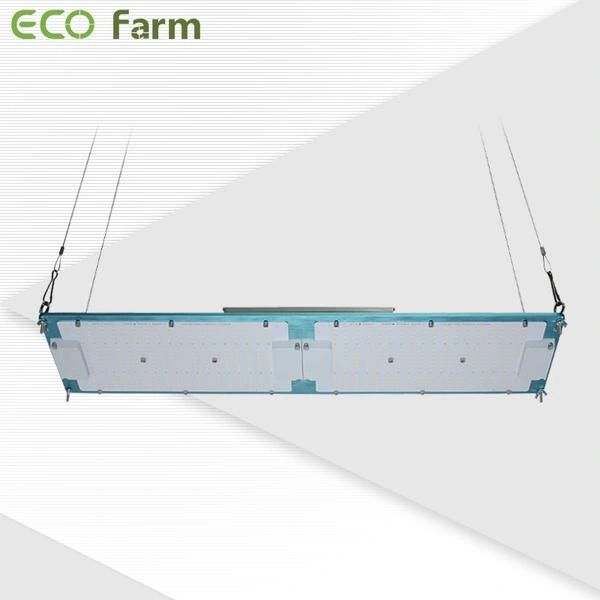
- Upgraded ECO Blue series growing lights have a dimming knob. A single light can be adjusted the light intensity at liberty.
- Excellent full spectrum- 3000K/3500K diodes providing more reddish light. The 660nm red light is especially useful during bloom, where it speeds up flowering time and boost yields. Turn your seeds into your own supply. And the light looks fairly natural, so it's good for accurately monitoring plant health.
- No Fan Noise Free. High Safety performance MEAN WELL Driver, Fair Waterproofing. Update aluminum board is thick and sturdy, doesn't put out a tremendous amount of heat, high-quality protective covers for cables; User-Friendly Packaging. Quality components mean the light lasts longer, but they also save you money.
- ECO Blue is designed with a special color - Tiffany blue.
- LED chip brand are Samsung lm301h and Epistar 660nm.
Yearld Pro 330W LED Grow Light
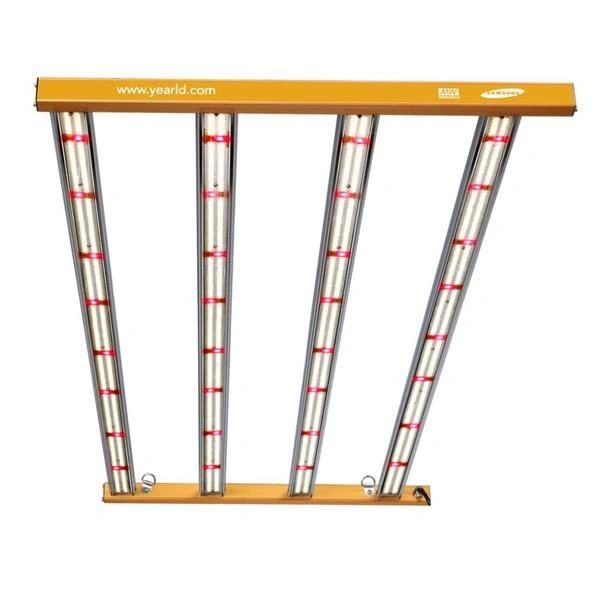
- Industry-leading, dimmable and extremely efficient Meanwell driver
- High-efficiency Samsung LM301B White + Osram Red LEDs
- 4000K white true full spectrum enhanced with 660nm deep red for optimal canopy penetration
- Industry-top efficacy: 2.6 μmol/j
- Reliable passive-cooled design (no cooling fans required)
- Full Spectrum: Ideal for seedling to harvest growth
- Replaces a single-ended 600W HID while only drawing 300W from the wall
Spider Farmer SF 1000 led grow light
.jpg/:/cr=t:0%25,l:0%25,w:100%25,h:100%25/rs=w:1280)
LOWER RUNNING COSTS & HIGHER-QUALITY YIELDS: SPIDER FARMER LED Grow Lights utilize the latest in high yielding LEDs technology today-Samsung LM301B diodes, high Energy Efficiency with 2.7 umol/J, delivers powerful light output and uniform canopy penetration to resulting maximum higher yields. Only consumes 450w, running 50% less power than the HPS or other SMD LEDs or Blurple lamps. Veg footprint is 6 x 6 ft, Flowering footprint is 5 x 5 ft.
CUSTOMIZED DIMMING DESIGN: Upgraded SF series growing lights have a dimming knob and light switch. A single light can be adjusted the light intensity at liberty. Multi-light Connection with unified dimming especially beneficial for large area of indoor growing and commercial planting.
IDEAL FOR ALL GROWTH STAGES: Excellent full spectrum- white, blue, red and IR (3000K, 5000K, 660nm and IR 760nm). 3000K diodes providing more reddish light and the 5000K providing more blueish. The 660nm red and IR light is especially useful during bloom, where it speeds up flowering time and boost yields. Turn your seeds into your own supply. And the light looks fairly natural, so it's good for accurately monitoring plant health.
WELL MADE & SOLID CONSTRUCTION: No Fan Noise Free. High Safety performance MEAN WELL Driver, Fair Waterproofing. Update aluminum board is thick and sturdy, doesn't put out a tremendous amount of heat, high-quality protective covers for cables; User-Friendly Packaging. Quality components mean the light lasts longer, but they also save you money.
Replies