Urban art as a form of expression
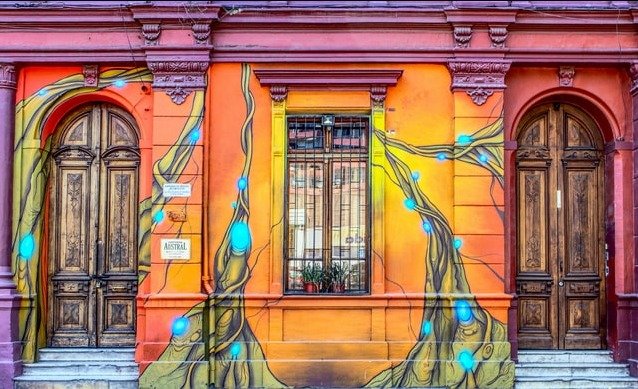
In this article, we seek to demonstrate how street or urban art will become increasingly important and influential in the world by comparing it with other world-renowned avant-gardes and emphasizing an artist who develops this new way of making art.
Movement characteristics
In recent years the landscape of the most important cities in the world has been renewed due to the emergence of a cultural movement made up of artists dedicated to graffiti and urban art.
The term street or urban art is used to describe the work of a heterogeneous group of artists who have developed a mode of artistic expression in the streets by using various techniques such as graffiti, screen printing, collage, and stencil.
Urban art as a form of expression
Many artistic movements arose out of a need to express, transmit social and cultural thoughts and beliefs. Street art, by integrating its elements in well-traveled public places, aims to surprise viewers. It usually has a striking subversive message that criticizes society with irony and invites social struggle, political criticism, or simply, reflection.
On the other hand, not all artists seek to convey a thought, but some are more spontaneous. They paint without thinking too much about what they want to convey to society.
Because of this, most of the works fall outside the parameters established in the art world. They are messy, don't contain much detail, and are hastily done without any prior analysis.
The themes used by the different artists adept at street art are diverse, but they always seek to provoke and, above all, persuade society; attracting attention is their main objective. Many of the themes have to do with emblematic characters of today and the past, with politics, or simply with various subjects.
Comparison with another vanguard
If the street or urban art were to be compared to some artistic avant-garde, it would undoubtedly be Dadaism since it arises intending to destroy all the codes and systems established in the art world. It is presented as a total ideology, as a way of life, and as an absolute rejection of any previous tradition or scheme.
Dadaism, like urban art, is against classical beauty, against the eternity of principles, against the laws of logic, against the immobility of thought, and the universal. Dadaists promote change, individual freedom, spontaneity, immediate, random, contradiction, defend chaos against the order, and imperfection against perfection. Street artists do the same since their works are spontaneous, messy, and lack any analysis before being made.
Another important point to be compared is the end of both avant-gardes. Both are aimed at the protest, shock, scandal, rebellion, provocation, the need to express a feeling or a thought with the help of expression ironic-satirical. They are based on the absurd and the worthless and introduce chaos in their scenes, breaking with traditional art forms.
The techniques used by both avant-gardes are similar to those that the Dadaists frequently resorted to using deliberately incomprehensible artistic methods, which relied on the absurd and irrational. Their manifestos sought to shock or perplex the public for them to consider established aesthetic values. For this, they used new materials, such as waste found in the street, and new methods, such as the inclusion of chance to determine the works' elements. The Dadaists professed all the arts but were not pigeonholed into any.
Many of the resources they used were collages, unconventional materials, and supports such as wood, paper, walls, and waste, and in some works, the stencil is beginning to be seen.
Street artists use some Dada techniques such as stenciling, collage, and materials such as wood, cardboard, and even waste bags and other techniques such as spray, stencils, stamps, screen printing, and airbrushing, among others.
Street art does not start from scratch but takes various aspects of Dadaism such as objectives, ideologies, techniques, and resources.
Tysen Knight: representative artist of the movement
Although in recent years this movement has been adding followers, each with a very marked and different style, Tysen Knight is an artist who is emerging as avant-garde due to the originality of the themes of his works, the diversity of resources and techniques such as screen-printing rustic, stenciling, graffiti, painting, and pressing of unconventional materials.
His work's images are varied and recurrent, ranging from pop culture inspired depictions of Buddha’s teachings. Vibrant colors are predominant in all his works due to the stencil technique.
The artist does not use only one technique but combines all the ones he knows, and that is what makes his works so striking and pleasing to the eye.
Replies