The prevalence of Yankee capitalism and racism in the United States
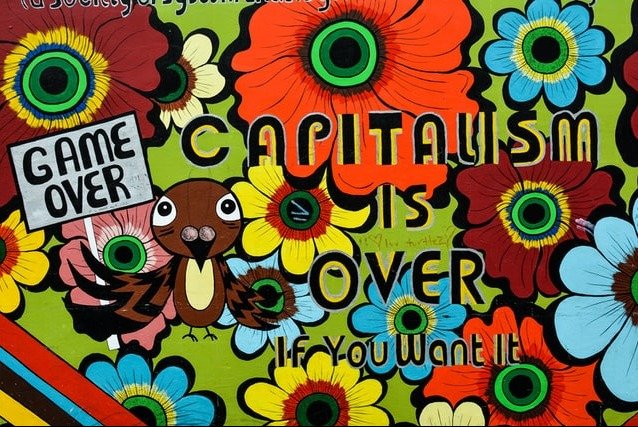
The anti-racist rebellion unleashed by George Floyd's assassination has called into question some of the pillars of Yankee racist capitalism, such as the debate on the abolition of the police force. Given these events, which put the gaze of millions on the role of the State's repressive institutions in the world's leading imperialist power. We want to make some notes on the particularities of the American prison system.
The United States, historically posited as the international champion of democracy, has the largest prison population in the world (2.2 million). With only 5% of the world's population, it concentrates 25% of the world's prison population, a proportion that indicates a robust punitive policy in the country, sustained over decades by Republicans and Democrats. Understanding that the State arises historically to contain (and sustain) the contradictions of class society (as Engels well defined in The Origin of the Family, Private Property and the State), the role of the repressive institutions of said State is clear to maintain the exploitative relations typical of capitalist society.
Just as the capitalist state does not lose the opportunity to repress the struggles of the exploited and oppressed when responses to exploitation are unleashed (as was very clear in the light of the brutal repression of the anti-racist rebellion), it also maintains a constant and daily repression on the working class (in the form of persecution and harassment towards the most precarious sectors of the same, as is the case of the Afro-American population in the black neighborhoods) destined to discipline the popular sectors and force them to endure any form of oppression with the head down. For this, it relies on not only the police but also the Judicial Power and the prison system. As the historic activist Pamela Winn, the founder of RestoreHER organization, rightly points out:
“In the United States, the police and prison institutions' class character are combined with the racism that is intrinsic to North American capitalism since its inception. The policy of mass incarceration targeting the black population has been, at different times in the last 150 years, a systematically planned tool of racial and political oppression”.
In the immediate aftermath of slavery, mass incarceration was used to gain some of the free labor that white landowners in the South had lost, putting thousands of black prisoners to forced labor. Already in the second half of the 20th century, the policy of mass incarceration was revived during the 1970s (Nixon), 1980 (Reagan), and 1990 (Clinton), now under the title of the famous "War on Crime" and "War on Drugs," which were nothing more than an offensive aimed at criminalizing broad sectors of the American black population, using fascist discourses around the crime problem to settle electoral disputes while doing business with the emerging business of private prisons.
As a result of this policy, the prison population doubled during the Clinton presidency, from 1 million to 2 million, similar to the current one. After two massive agreements won by the Afro-American community (the abolition in 1863 and the Civil Rights Act in 1965), Yankee capitalism responded with repressive offensive policies to maintain racial oppression over said sector of the population.
Replies