The Fight for a Species - Protecting South Africa's Rhino Population
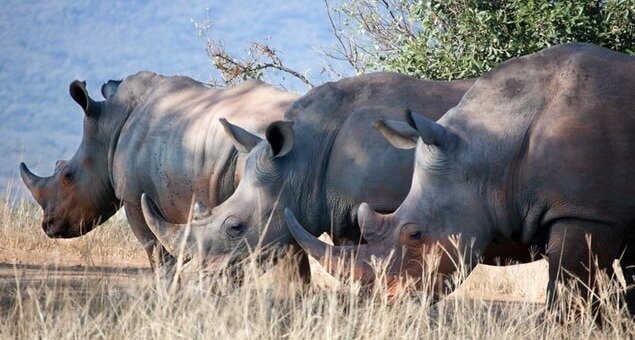
In 2021, a rhino was killed by poachers and their criminal networks every 19 hours in South Africa. The numbers are on the rise with 451 rhinos slaughtered for their horns in 2021 according to the Government of South Africa’s Department of Forestry, Fisheries and the Environment, a 15% increase in killings from 2020. Tourism was an important source of funding for anti-poaching teams and other rhino conservation efforts, and the global pandemic has drastically reduced this source of vital funding. There are now fewer eyes and ears on the ground to combat poachers and their criminal networks.
Approximately 2,000 black rhinos and 18,000 white rhinos, are left in South Africa. Black rhinos are classified by the IUCN as critically endangered, and the southern white rhino is classified as near threatened. The white rhino has experienced a 12% decrease in the past decade, mainly due to rampant poaching that began during the mid-2000s. Between 1970 and 1993, black rhino numbers decreased by 96% from approximately 65,000 to 2,300, also due to poaching.
White rhinos are the second-largest land mammal with their name being derived from the Afrikaan’s word “weit” that means wide and refers to the white rhino’s mouth, not its color. There are two genetically different subspecies found in different regions in Africa, the northern and southern white rhino. Currently there are only two northern white rhinos left on our planet, both of which are female and live in the Ol Pejeta Conservancy in Kenya. They are protected round-the-clock by armed guards and their near extinction is a result of decades of poaching for rhino horn.
The rhino poaching crisis begun in the mid-2000s when the demand for their horn exploded. On a per-gram basis rhino horn is more valuable than any illicit drug. The current poaching crisis is being fuelled by the demand for rhino horn in Asian countries, mainly China and Vietnam. The horn is thought to hold medicinal value and is consumed by the wealthy to cure illnesses and conditions, such as, virility, hangovers, or even as a status symbol of wealth. However, rhino horn is made of keratin, like a fingernail, and has zero medicinal benefit.
The Need to Protect South Africa’s Black and While Rhino Population
Without intervention, at the current rate of poaching, black and white rhino could become extinct within the next 10 years. If we don’t act fast, we will see this iconic species wiped from our planet.
How are Rhinos being Protected?
There are many strategies used in the war against rhino poaching and the criminal networks behind these violent killings. These tactics range from destroying the supply chain, breaking the demand, de-horning rhinos, translocations, intelligence operations and more. Here are a few strategies that are being used:
Armed anti-poaching teams play a vital role in protecting both white and black rhino. These teams use a para-military approach to protecting the species from armed and dangerous poachers. Some rhino populations are monitored 24 hours a day. Canine and calvary units are often deployed to help monitor vast territory that rhinos need to roam.
Intelligence operations also play an important role in the fight against rhino poaching. Sophisticated and dangerous criminal networks are behind the rhino poaching crisis. Sting operations, airport and border surveillance, sniffer dogs and more are employed to dismantle the criminal networks behind rhino poaching.
De-horning is another method this used to deter poachers. By dehorning rhinos, there is a reduction in incentive for poachers to come into a reserve because the payoff will be much lower. Rhinos use their horns mainly for the defense of their territory, so it is critical to dehorn entire populations in an area, giving all rhinos an even playing ground. This makes de-horning difficult in vast wildlife areas, such as, the Kruger National Park as it is expensive and not practical to de-horn large populations of animals, particularly since the horn grows back within two years. To de-horn a rhino, the animal is first safely sedated, and a face mask is placed over its eyes to block vision and earplugs are placed in the ears – this all reduces trauma to the animal.
Targeted educational programs are also thought to be another important tactic in fighting the crisis. Rhino horn is a placebo, it has no effect other than what the consumers choses to believe in. If this belief system can be altered, then demand will decrease. Additionally, rhino horn is used to convey status in Asian cultures. Again, with the right strategy by the Chinese government, we could see demand decline. An example where this happened in the past is when the Chinese government made a decree that shark fin soup would longer be served at government functions - demand fell by 30% almost instantly!
Who is Protecting South Africa’s Rhinos?
Empowers Africa, a U.S. 501(c)(3) organization, is committed to the protection of both white and black rhino. The organization has granted more than ten million dollars to over 60 organizations in more than 15 countries, all of which are working protect wildlife, conserve natural habitat, and empower people. Empowers Africa is actively playing a role in protecting South Africa’s rhino’s population by partnering with organizations on the ground in Africa to protect the species from the hands of poachers.
Empowers Africa recently funded foot patrol for the anti-poaching team for a twelve-month period at the Samara Private Game Reserve. Samara is a 67,000 acres private game reserve in South Africa and home to both white and black rhino. The size of the reserve, coupled with mountainous terrain and remote location make it perfect habitat for rhino, but also a formidable area to safeguard. Foot patrol anti-poaching teams are vital to the protection of rhinos at Samara.
Empowers Africa also funds education films about rhino conservation to shed light on the poaching crisis and ways to combat the war. One of Empowers Africa’s short films about rhino conservation, Empowers Africa Conservation Trip, won the 2019 NorCal Film Fest, the 2019 Independent Short Awards, the 2019 Crown Wood International Film Festival and the 2019 Accolade Global Film Competition. Another short film, Dehorning a Rhino in the Wild, was featured in National Geographic’s Short Film Showcase and won Best Documentary Short at the 2017 London Independent Film Awards. This short film covers the practice of rhino dehorning as a way to combat poaching. Empowers Africa has also been involved in a full-length documentary, The Last Horns of Africa, a film that specifically addresses the fight to save South Africa’ rhino population.
Finally, Empowers Africa has been an important supporter of Care for Wild Rhino Sanctuary, the largest rhino orphanage in the world. When a female rhino is killed, poachers often leave the mother’s young baby alive to fend for itself in the wild. Rhino calves drink their mother’s milk for a period of 2 plus years and will die within a couple of days without milk. Care for Wild is a remarkable place where babies are brought in with serious injuries and extensive trauma and rehabilitated to healthy individuals. The sanctuary just achieved history in February 2022 when the first baby was born to orphaned rhino parents. Empowers Africa’s Executive Director, Krista Krieger, states “This is a remarkable success story of rhino conservation and Empower Africa is proud to support this incredible sanctuary!”
Replies