Manual or Electric Toothbrush - Which Is Better?
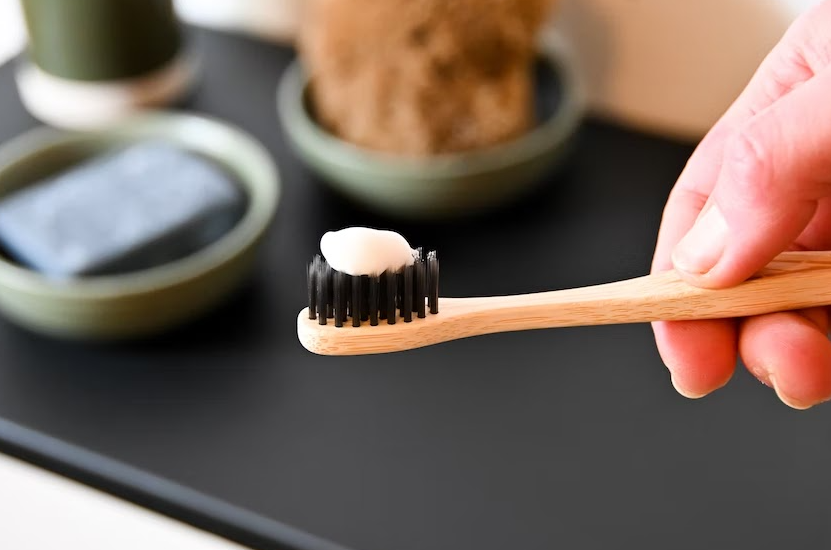
Both manual and electric toothbrushes are essential and useful tools for keeping your teeth clean, but which one is better? Let’s compare both, and you can see what can work for you the best.
Each has pros and cons; both are good if you follow the proper cleaning technique. Your effort provides the best dental care, and if you do it properly, you can achieve good results regardless of the toothbrush type.
However, they do differ from each other, and you can choose what is more convenient for you.
Manual Toothbrushes
Pros:
- Low price
- Environmentally friendly, but not all of them. Go for those that are made of natural materials.
Cons:
- It takes a lot of time and skills to completely clean your teeth from plaque.
- Difficult to clean hard-to-reach areas.
- Difficult to control pressure.
- Difficult to use for people with joint pain (arthritis).
Electric Toothbrushes
Pros:
- The quality of cleaning the teeth is much better than after a conventional, manual brush.
- Cleans hard-to-reach areas well.
- Cleans up plaque better.
- There is a pressure sensor. It will help prevent injury to the gums and tooth enamel.
- Most brushes have timers, and they can be set by segment, so it will show how much time to devote to a particular tooth.
- It is easier to teach a teenager how to brush their teeth properly, as electric toothbrushes are of interest to children. Many manufacturers of electric toothbrushes release additional applications for smartphones and tablets that can be downloaded as games. An electronic diary of their teeth brushing routine is also built in there, and, accordingly, the smartphone can remind the child that it is time for him to brush their teeth.
- With different attachments, the whole family can use one brush. And if you carefully handle the brush, it will last from five to ten years. In addition, some manufacturers incorporate indicator bristles into the nozzles. As soon as the indicator bristle has changed color or dropped to a certain level, you need to change the nozzle.
Cons:
- One of the main disadvantages of electric toothbrushes is the high cost.
- There are a number of brushes for which it is quite difficult to find nozzles. Therefore, when choosing an electric brush, check in advance that the nozzles are on sale.
- Needs regular recharging. Cheap samples most often run on AA batteries and make only fast forward movements, and this does not guarantee the necessary quality of dental care.
- Not environmentally friendly.
Based on the above advantages and disadvantages, we can conclude that, despite the high cost, electric toothbrushes are “smarter” compared to manual ones. Especially in those cases when it is necessary to instill the skill of brushing children's teeth.
To understand how thoroughly you brush your teeth, use a plaque screening tool. They are sold in pharmacies in the form of tablets containing food coloring or in the form of special solutions that also contain food coloring.
Before brushing your teeth, you need to chew the tablet or rinse your mouth with a solution. As a result, the plaque that is on the teeth will be stained. Moreover, modern means by the degree of color intensity allow you to determine how many days old your plaque is - today it or accumulated over several days. You can also see in which places the teeth most often remain poorly cleaned.
Of course, the choice of a toothbrush is a purely individual matter. However, the main thing that each of us needs to remember is that the more thoroughly we brush our teeth and take care of our oral cavity, the less problems we will have with our teeth.
Replies