Kinesiology Taping for Plantar Fasciitis
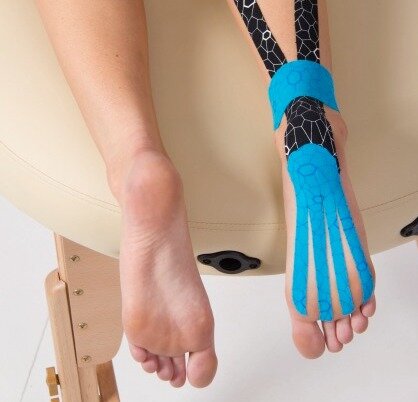
Plantar fasciitis is characterized by foot pain and acute pains on the underside of the heel. For plantar fasciitis, physical therapy may be beneficial, and one part of your rehab may include utilizing kinesiology tape to alleviate your foot and heel discomfort.
Plantar fasciitis is an inflammation or irritation of the plantar fascia, which is a thick band of tissue that extends from your heel to your toes and gives your foot's arch form and stability. You may feel pain at the bottom of your foot or near your heel if your plantar fascia becomes irritated or over-stressed.
Because of the pain, functional activities such as walking or running may be limited. It's critical to work with your physical therapist to figure out what's causing your plantar fasciitis and what therapies will work best for you.
Your physical therapist may utilize a variety of therapy approaches to help you get rid of your plantar fasciitis. Ultrasound, electrical stimulation, and iontophoresis are some of the options. These therapies are aimed at reducing the discomfort and inflammation associated with plantar fasciitis.
To properly treat your plantar fasciitis, you must focus on and treat the biomechanics and underlying reasons of your problem. Your physical therapist can help you figure out what's causing your foot pain and prescribe exercises and stretches that will help you feel better and improve your overall functional mobility.
What Does Kinesiology Tape Do?
Your physical therapist may recommend kinesiology tape to assist in alleviating your plantar fasciitis symptoms. The basic goals of utilizing kinesiology tape for plantar fasciitis are to reduce discomfort, relieve strain on the plantar fascia, support the natural arch of your foot, and facilitate the muscles around your foot to provide greater support.
Applying Kinesiology Tape to Your Foot
Before you apply kinesiology tape to your foot, check with your physical therapist (PT) so you’re sure that you're doing it correctly and that the tape is safe for you to use. Your physical therapist can help you figure out if kinesiology tape will help you with your plantar fasciitis.
Some persons with certain medical issues should avoid using kinesiology tape, so talk to your physical therapist or doctor before using it to treat your plantar fasciitis.
You may need assistance applying the tape to your foot, and you should familiarize yourself with the many types of tape strips required to utilize kinesiology tape. For plantar fasciitis, here's how to use kinesiology tape:
- Place your foot in front of you and gradually stretch your toes up towards your knee.
- Apply a 75 percent to 100 percent stretch lift strip to the bottom of your foot.
- Secure the lift strips' ends on the upper side of your foot with no stress.
- To ensure that your entire medial arch is covered, repeat this process two to three times more, each strip slightly overlapping the preceding one.
The kinesiology tape should not be folded on the underside of your foot and should be comfy. The tape can be left on for two to five days, and it can get moist. Simply remove the tape if it starts to tear away.
Your physical therapist may advise you to use kinesiology tape on the muscles that surround your foot and ankle to help inhibit or facilitate those that may be contributing to your plantar fasciitis. To effectively cure your issue, you may need to tape your shin (anterior tibialis), calf, or posterior tibialis muscles.
Does K-Tape Really Work?
Keep in mind that kinesiology taping is a relatively new procedure utilized in physical therapy and sports medicine, and its effectiveness has yet to be thoroughly determined. Some preliminary research suggests that it can be beneficial.
Other research, on the other hand, suggests that kinesiology taping adds little or no value to a physical therapy program.
As a result, it's critical to discuss kinesiology taping with your physical therapist to fully comprehend the expected outcomes and benefits.
Replies