Is the Kumano Kodo Trail Difficult? Distance, Routes and Highlights
The Kumano Kodo Trail is a network of ancient pilgrimage routes in Japan’s Kii Peninsula. The most popular Nakahechi route covers roughly 70 km when walked in full, although travelers can choose shorter sections. Difficulty ranges from moderate to challenging because of steep forest paths, uneven terrain, and long walking days.
The trail is best known for its sacred shrines, mountain scenery, traditional villages, and historic pilgrimage experience. With sensible planning, suitable footwear, and a realistic itinerary, beginners with reasonable fitness can complete selected sections comfortably.
What Is the Kumano Kodo Trail?
Definition: The Kumano Kodo is a network of historic pilgrimage trails through Japan’s Kii Peninsula that lead toward the three sacred Kumano Sanzan shrines: Kumano Hongu Taisha, Kumano Nachi Taisha, and Kumano Hayatama Taisha.
Unlike a single continuous hiking trail, Kumano Kodo consists of several interconnected pilgrimage routes. Each route offers a different combination of distance, terrain, scenery, villages, and cultural experiences.
The routes developed over centuries as pilgrims traveled through the mountains toward the sacred Kumano region. Today, they attract hikers looking for a combination of nature, Japanese culture, history, and physical challenge.
How Long Is the Kumano Kodo Trail?
There is no single distance for the Kumano Kodo because it is a network of routes.
The Nakahechi Route is generally the most popular choice for international hikers. A complete journey can cover approximately 70 km of walking, depending on the exact itinerary and route variations.
Other routes have very different lengths and levels of difficulty.
Route | General Character | Typical Difficulty |
Nakahechi | Main pilgrimage route, mountain villages and shrines | Moderate–Challenging |
Kohechi | Remote mountain route | Challenging |
Ohechi | Coastal scenery | Moderate |
Iseji | Long coastal pilgrimage route | Moderate–Challenging |
Omine Okugake | Remote and rugged mountain route | Very Challenging |
For first-time visitors, Nakahechi is usually the easiest route to plan because it has established accommodation and transportation options along popular sections.
How Difficult Is the Kumano Kodo Trail?
The Kumano Kodo is generally considered a moderate to challenging hike, rather than a simple walking holiday.
The biggest challenge is not necessarily the total distance. Instead, hikers need to deal with repeated climbs and descents, stone steps, roots, mud, and uneven mountain paths.
Why Can the Kumano Kodo Be Challenging?
Several factors affect the difficulty:
- Steep ascents and descents
- Uneven forest trails
- Long walking days
- Rain and muddy conditions
- Limited services in some remote sections
- Carrying a backpack between accommodations
Weather can significantly change trail conditions. A route that feels manageable in dry weather may become considerably harder after heavy rain.
Which Kumano Kodo Route Is Best for Beginners?
For many first-time hikers, Nakahechi is the most practical starting point.
It combines historic pilgrimage paths with villages, mountain scenery, accommodation, and access to major shrines. You also do not have to walk the entire route.
A beginner-friendly approach is to choose shorter stages and allow enough time for rest.
How Can Beginners Prepare for the Kumano Kodo?
A useful preparation plan is:
- Build walking endurance with regular walks several weeks before your trip.
- Practice hills and stairs, because elevation changes are an important part of the trail.
- Wear hiking shoes or boots that you have already broken in.
- Test your backpack before traveling and avoid unnecessary weight.
- Plan accommodation in advance, particularly during busy periods.
- Check weather and trail conditions before each hiking day.
You do not need to be an elite athlete, but reasonable cardiovascular fitness and preparation make the experience much more enjoyable.
What Are the Main Highlights of the Kumano Kodo?
The appeal of the Kumano Kodo goes beyond hiking.
What Shrines Can You Visit?
The pilgrimage region is associated with the Kumano Sanzan, the three major sacred shrines:
- Kumano Hongu Taisha
- Kumano Nachi Taisha
- Kumano Hayatama Taisha
These spiritual sites are among the most important highlights of a Kumano Kodo journey.
What Natural Scenery Can You Expect?
The trail passes through dense forests, mountain valleys, streams, rural settlements, and traditional landscapes.
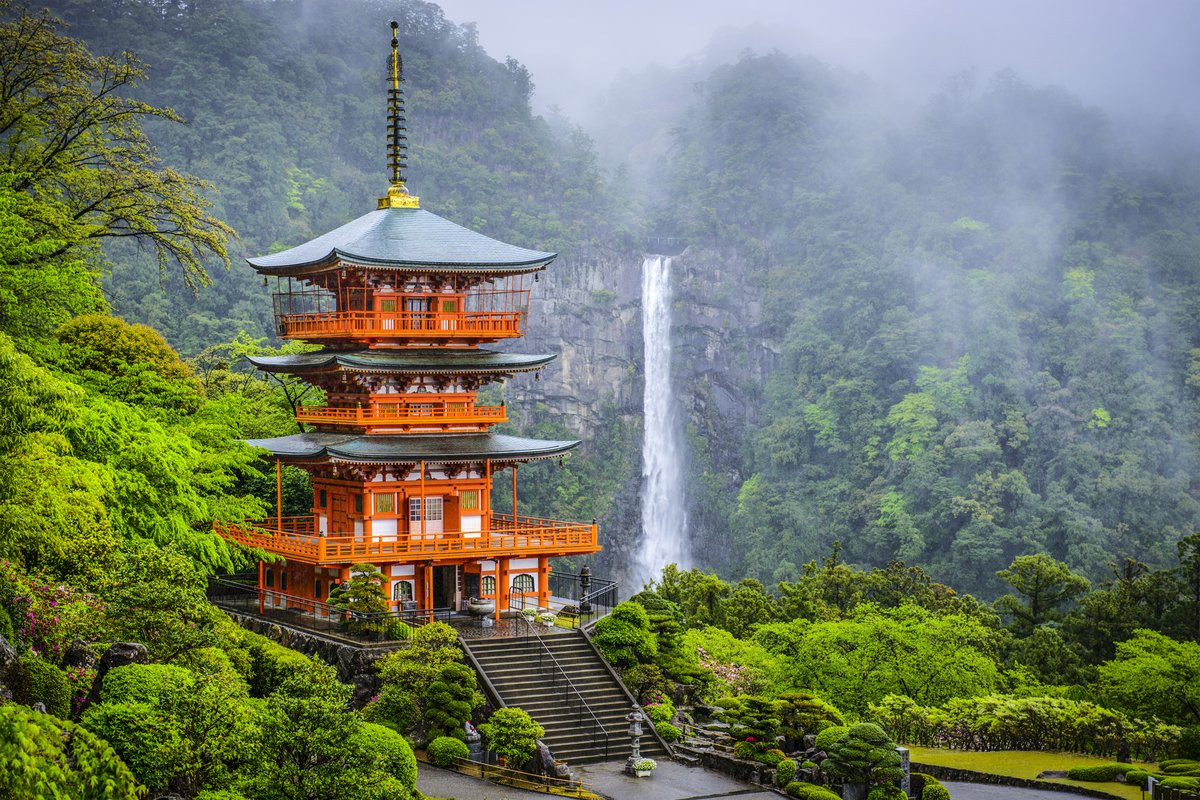
One of the most recognizable sights is Nachi Falls, located near Kumano Nachi Taisha. The combination of the waterfall, shrine architecture, and surrounding forest creates one of the region's most memorable views.
What Is the Pilgrimage Experience Like?
One of the distinctive features of the Kumano Kodo is the opportunity to stay in small Japanese communities and traditional accommodations.
Depending on your itinerary, you may experience local meals, Japanese-style rooms, hot springs, and rural hospitality.
What Is a Typical Kumano Kodo Itinerary?
A multi-day Nakahechi itinerary often divides the hiking into manageable stages rather than attempting the route in one continuous push.
A typical journey may include:
Tanabe → Takijiri-oji → Chikatsuyu → Hongu → Kawayu Onsen → Nachi area
The exact itinerary varies considerably. Some travelers walk only a few stages, while others spend a week or longer exploring the region.
The important point is to plan according to your daily walking distance, elevation gain, accommodation locations, and transportation options, rather than simply choosing a total kilometer figure.
What Are the Common Mistakes People Make?
Poor planning can turn an enjoyable pilgrimage into an unnecessarily difficult hike.
What Should You Avoid?
Common mistakes include:
Underestimating elevation: A relatively short distance can still involve substantial climbing.
Using unsuitable footwear: Casual sneakers may be uncomfortable or unsafe on muddy, rocky, or uneven sections.
Carrying too much: A heavy backpack becomes increasingly noticeable during repeated climbs.
Rushing the itinerary: Trying to maximize distance every day leaves little time to enjoy villages, shrines, scenery, and accommodation.
Ignoring weather: Rain can make mountain trails slippery and significantly alter walking conditions.
Failing to reserve accommodation: Popular pilgrimage areas can have limited lodging, particularly during busy travel periods.
What Should You Pack for the Kumano Kodo?
Your packing list should balance comfort, safety, and weight.
Useful items include:
- Broken-in hiking shoes or boots
- Lightweight rain jacket
- Comfortable hiking clothing
- Small daypack
- Water bottle or hydration system
- Basic first-aid supplies
- Portable phone battery
- Navigation information or offline maps
- Quick-drying clothing
- Hiking poles if you regularly use them
The best equipment is the equipment you already know how to use.
Is the Kumano Kodo Worth Hiking?
For travelers interested in hiking, Japanese culture, spirituality, and rural scenery, the Kumano Kodo offers an unusually varied experience.
Unlike a conventional mountain trek, the journey connects nature, pilgrimage, history, food, accommodation, and local communities.
The route also gives travelers flexibility. You can build a demanding hiking itinerary or choose shorter sections with more time for sightseeing and cultural experiences.
What Is a Realistic Example for a First-Time Hiker?
Imagine a traveler who normally walks but has little experience with multi-day mountain hiking.
Instead of attempting the longest possible itinerary, they could choose several Nakahechi stages, stay in traditional accommodations, and schedule rest or sightseeing time around the hiking days.
This approach reduces pressure while still providing the essential Kumano Kodo experience: forest trails, mountain villages, pilgrimage sites, and the arrival at sacred destinations.
The lesson is simple: distance should not be the only measure of difficulty.
Expert Tips for a Better Kumano Kodo Experience
Experienced hikers can manage longer stages, but beginners often benefit from a slower approach.
What Are the Best Practical Tips?
Start early: Beginning earlier gives you more daylight and flexibility if the trail takes longer than expected.
Keep your pack light: Every unnecessary kilogram becomes more noticeable on steep sections.
Respect the terrain: The Kumano Kodo is an ancient mountain pilgrimage network, not a flat sightseeing path.
Leave flexibility: Weather, fatigue, and trail conditions can affect your walking time.
Book ahead: Accommodation can be an important part of the itinerary rather than an afterthought.
Enjoy the journey: Do not treat the trail purely as a distance challenge. The cultural and spiritual experience is a major part of its appeal.
Frequently Asked Questions About the Kumano Kodo
How many days do you need for the Kumano Kodo?
Most travelers need several days to experience a substantial section of the Kumano Kodo. A complete Nakahechi journey is commonly planned as a multi-day hike, while shorter itineraries can be completed in two or three days depending on the selected sections.
Is the Kumano Kodo suitable for beginners?
Yes. Beginners can hike parts of the Kumano Kodo, especially with proper preparation and a sensible itinerary. The main challenge is the mountainous terrain, so regular walking, hill training, appropriate footwear, and lightweight luggage are strongly recommended.
Is the Kumano Kodo harder than the Camino de Santiago?
The two pilgrimages are difficult in different ways. The Kumano Kodo generally has more pronounced mountain terrain, including steeper climbs and uneven forest paths. Some Camino routes are longer overall but can have more gradual terrain. Difficulty ultimately depends on the specific route and itinerary.
What is the best Kumano Kodo route?
The Nakahechi Route is generally the most popular choice for international visitors because it provides a strong combination of historic pilgrimage trails, mountain scenery, villages, accommodation, and access to the Kumano Sanzan.
What is the best time to hike the Kumano Kodo?
Spring and autumn are popular seasons because of their generally comfortable hiking conditions and attractive scenery. Summer can be hot and humid, while winter conditions can vary in the mountains. Always check current weather and trail information before setting out.
Do you need to be very fit to hike the Kumano Kodo?
You do not need exceptional athletic ability, but a reasonable level of fitness is helpful. Regular walking and hill training before the trip can make steep climbs and consecutive hiking days much easier.
Can you stay in traditional Japanese accommodations?
Yes. Depending on the route and itinerary, travelers can stay at traditional Japanese inns and other local accommodations. Some areas are also known for hot-spring experiences, making an overnight stay part of the cultural experience.
Is the Kumano Kodo only one trail?
No. Kumano Kodo refers to a network of pilgrimage routes across the Kii Peninsula. Nakahechi is the best-known route for many international hikers, but Kohechi, Ohechi, Iseji, and other historic routes offer different experiences.
Conclusion
The Kumano Kodo Trail is a historic Japanese pilgrimage network offering a mix of mountain hiking, sacred shrines, traditional villages, and spectacular natural scenery. The Nakahechi Route is a practical choice for many first-time visitors, but its steep and uneven terrain requires preparation. Choose an itinerary that matches your fitness, pack light, plan accommodation carefully, and allow enough time to enjoy the journey rather than simply chasing distance.
Replies