Is In-Office Teeth Whitening Better Than at Home
In recent years, teeth whitening procedures of all kinds have grown in popularity. Even though most of our teeth are white, tooth enamel comes in various hues and can discolor or become stained over time. There are several causes of tooth discoloration, some of which are under your control and others which are related to disease or trauma.
If you are thinking of getting your teeth whitened, make sure you are informed about the procedure and what to anticipate. You should also speak with your dentist to find out if teeth whitening is right for you and what the best whitening technique is for your particular circumstances.
How Does Teeth Whitening Work?
Teeth whitening is a reasonably easy procedure. The methods differ depending on the product you select and whether you want to whiten at home or in a dental office.
One of two tooth bleaches—hydrogen peroxide or carbamide peroxide—is present in teeth-whitening products. These substances help brighten teeth by breaking up stains into smaller bits and lowering the color concentration.
Teeth Whitening Options
There are many possibilities for both in-office and at-home teeth whitening. Before starting any treatment, make sure you speak with your physician. There are three main types of teeth whitening options: mild surface whitening, stronger teeth whitening, and deeper stain removal.
Whitening Toothpaste
Teeth surface stains can be removed with whitening toothpaste. The softest teeth whitener is toothpaste, which is ideal for people with sensitive teeth. Whitening toothpastes typically don't have any negative side effects because they work by polishing rather than using chemicals that bleach teeth. But because they are softer, they don't whiten teeth as dramatically as those made of chemicals. Additionally, whitening toothpaste must be used often to see benefits, which typically take weeks or months.
At-Home Teeth Whitening
You can buy over-the-counter or at-home whitening kits from your dentist. Kits come in a variety of forms and contain items like brushes, rinses, lights, trays, and whitening strips. They typically contain peroxide, which, when applied frequently over days or weeks, acts underneath the surface to brighten tooth enamel.
Rather than using store-bought trays that come in one size for all teeth, your dentist might create a custom whitening tray to fit your upper and lower teeth. Depending on your dentist's advice, you will either wear these bespoke trays overnight or for brief periods during the day after squeezing the whitening gel inside. Make sure to follow your dentist's recommendations to avoid irritating your teeth or gums from the peroxide in the gel trays if you wear them for an extended period.
Professional Teeth Whitening
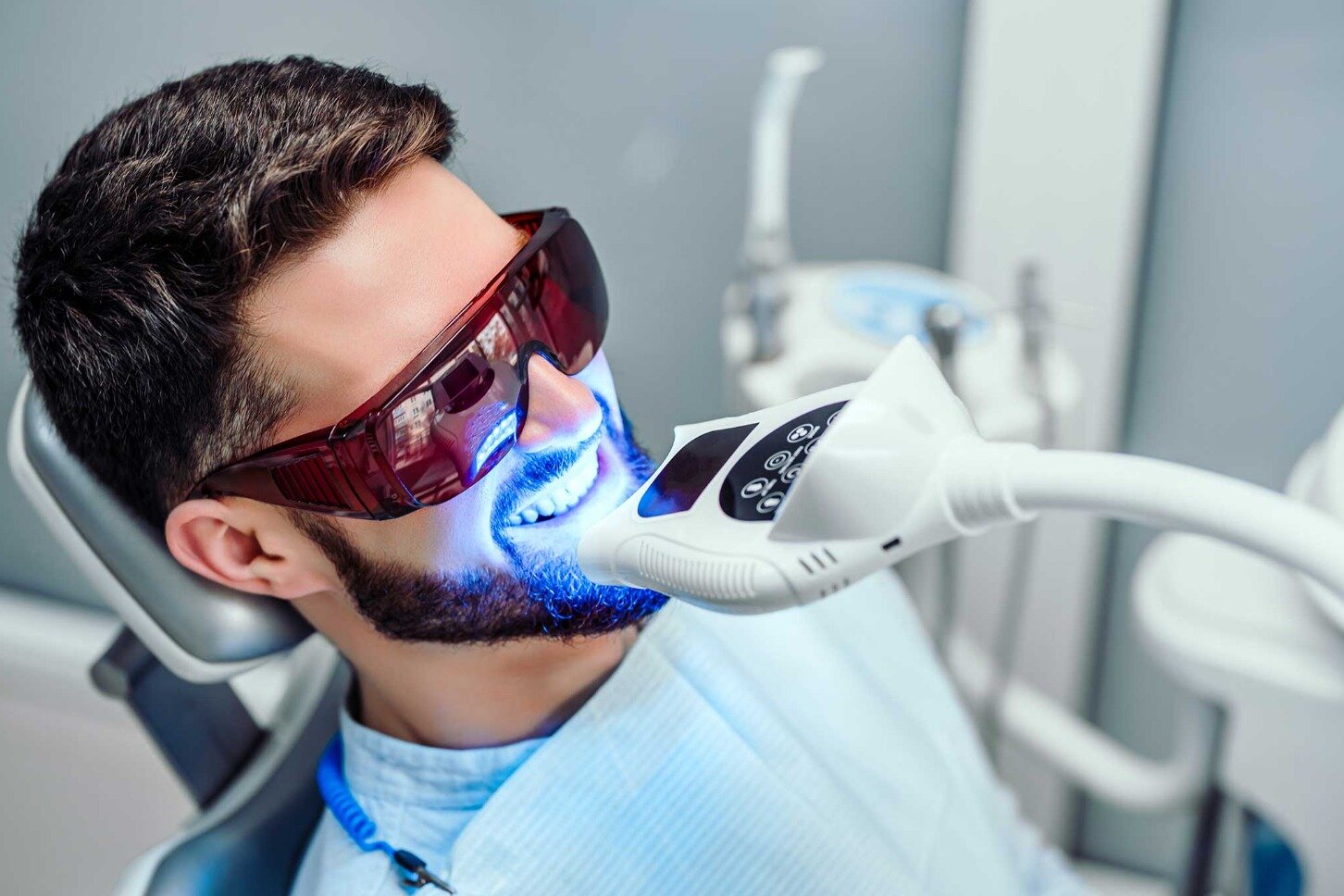
In a dentist's practice, professional whitening is performed. In-office whitening is far more potent because the solution contains more peroxide than the other two options. They are more rapid than at-home techniques in changing the color of your teeth.
In-office teeth whitening takes roughly sixty minutes. The gum tissues are wrapped with a protective gel or a small piece of rubber to assist in shielding the mouth from the peroxide. Now and then, peroxide is combined with a light or laser.
Differences Between Professional Teeth Whitening and At-Home Teeth Whitening
While there are a few key distinctions between at-home and in-office teeth whitening, the ideal approach will generally rely on your oral health and the outcomes you hope to attain.
Time
It takes a lot longer to get equivalent effects when teeth whitening at home than in the dentist's office. While you might spend one to two hours at the dentist's office and leave with eight shades of brighter teeth, at home, you'll need to spend one to two hours every day for several days or weeks to get three to six shades of whiter teeth.
Cost
While teeth whitening kits purchased at home typically cost $50, in-office teeth whitening can cost up to $300*. Professional teeth whitening has the primary advantage of whitening teeth far more quickly than at-home methods, which frequently require several kits to accomplish and maintain whitening. Your teeth and dental health may also play a role in the variable results you get with at-home tests.
Longevity
With in-clinic whitening, your teeth will stay whiter longer than at-home techniques because the concentrated solution allows for deeper whitening penetration underneath the tooth's surface.
Make an appointment with your provider to determine which teeth-whitening treatment is ideal for you, whether you want to start bleaching your teeth at home or in our clinic!
Replies