How to Make Money with Bonds: Interest, Yield, and More Explained
Curious about earning income from bonds? This beginner-friendly guide breaks down how bonds generate money through interest, coupon payments, yield to maturity, and how to evaluate a bond's profitability before investing.
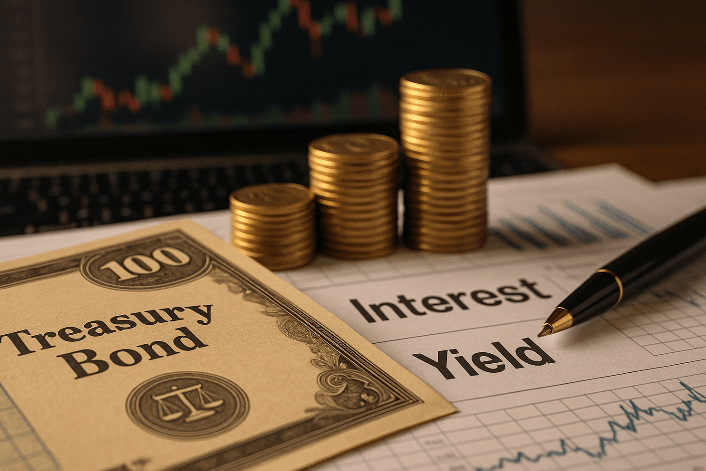
When people think about investing, stocks usually steal the spotlight. But if you’re after steady income, lower risk, and long-term stability, bonds deserve your attention.
Unlike stocks that rely on company growth or dividends, bonds offer predictable returns - you loan money, and in return, you get interest. Simple, right?
Well, kind of.
There’s more to making money with bonds than just buying one and waiting. In this guide, we’ll walk you through how bonds generate income, how to analyze their profitability, and what all those terms like coupon and yield to maturity really mean.
First Things First: What Is a Bond, Really?
At its core, a bond is a loan. You’re lending money to a government, municipality, or corporation, and in return, they promise to:
- Pay you interest (coupon payments) on a regular basis
- Return your principal (the amount you lent) at a specific date in the future, called the maturity date
Example: You buy a $1,000 10-year bond with a 5% annual coupon. You’ll get $50 per year in interest, and at the end of 10 years, you’ll get your $1,000 back.
How Bonds Make You Money
1. Interest (a.k.a. Coupon Payments)
This is the most straightforward way bonds pay investors. The coupon rate is the annual interest paid, based on the bond’s face value.
- If a bond has a 5% coupon and a $1,000 face value, you earn $50 per year
- Payments are usually made semiannually, so you’d get $25 twice a year
This income is typically fixed, which is why bonds are often called fixed-income investments.
2. Price Appreciation (Buying at a Discount)
Not all bonds are sold at face value. If you buy a bond below face value (at a discount), you’ll also earn money when the bond matures.
Example:
You buy a $1,000 bond for $950.
When it matures, you’ll receive the full $1,000.
That’s an extra $50 in profit - plus all the interest payments you received along the way.
This is where bond investing can get a bit more strategic.
3. Reinvesting Interest Payments
If you reinvest the interest (instead of spending it), you can compound your returns - just like reinvesting dividends in stocks.
This works especially well in bond funds or tax-advantaged accounts like IRAs, where you can let the earnings grow without immediate taxes.
4. Trading Bonds Before Maturity
You don’t have to hold a bond until maturity. Bonds are bought and sold daily in the secondary market.
- If interest rates go down after you buy a bond, your bond becomes more valuable (because it pays higher interest than newer ones).
- You can sell it at a premium and pocket the profit.
But beware - if rates go up, your bond loses value. That’s called interest rate risk.
Understanding Bond Yield (The Real Profit Metric)
Now let’s talk yield - a term that’s often misunderstood.
While the coupon rate is fixed, the yield tells you how much you’ll actually earn based on what you paid for the bond.
1. Current Yield
This is a quick snapshot.
Formula: Current Yield = (Annual Coupon Payment ÷ Market Price of the Bond) × 100
If a $1,000 bond with a $50 coupon is selling for $950:
Current yield = ($50 ÷ $950) × 100 = 5.26%
2. Yield to Maturity (YTM)
This is the most important metric for serious investors.
It factors in:
- The bond’s current market price
- The coupon payments
- The time until maturity
- The difference between purchase price and face value
YTM tells you your total return if you hold the bond to maturity - including all interest and capital gain/loss.
You don’t have to calculate this manually. Most brokers and platforms show the YTM for every bond they list.
Think of YTM as the bond equivalent of an “annual return.”
How to Evaluate a Bond Before You Buy
Whether you're buying individual bonds or through a bond fund, here's a checklist to assess their quality:
1. Issuer Type
- Government bonds (like U.S. Treasuries) = safest
- Municipal bonds = tax advantages
- Corporate bonds = higher yield, more risk
2. Credit Rating
Check the bond’s credit rating from agencies like Moody’s, S&P, or Fitch.
- AAA/AA = high quality, low risk
- BBB = investment grade (okay for many portfolios)
- Below BBB = high-yield or "junk" bonds (more risk, more reward)
3. Time to Maturity
Longer terms usually = higher yield but more sensitivity to interest rate changes.
Match bond durations to your goals:
- Short-term = flexibility and lower risk
- Long-term = higher returns, more volatility
4. Tax Implications
- Interest from municipal bonds may be tax-free
- Interest from corporate bonds is usually taxable
- Bonds in a Roth or traditional IRA avoid taxes until withdrawal
5. Callability
Some bonds can be “called” (bought back early) by the issuer.
If rates drop, they may do this - leaving you to reinvest at lower rates.
Tips for Bond Investing Beginners
- Diversify across different types of bonds (corporate, municipal, Treasury)
- Consider bond ETFs or mutual funds to spread risk
- Use bonds to balance stock volatility in your portfolio
- Ladder your bonds to spread out maturity dates
- Keep an eye on interest rates - they impact bond prices and yields
Sure, bonds may not be as thrilling as meme stocks or crypto. But when it comes to reliable income and portfolio stability, they absolutely shine.
By understanding how interest, yield, and price movements work, you can use bonds not just to preserve wealth - but to grow it predictably.
Whether you’re building a retirement strategy or just want a safer income stream, bonds can play a vital role - especially when you know how to make them work for you.
Replies