How to dry and cure your cannabis to the highest quality?
Harvest time might seem like the final stage in the growing process, but that couldn’t be further from the truth. After you’ve harvested the fruits of your labour, it’s time for the most vital steps of them all: drying and curing.
Drying is just as it sounds—it’s the process of removing the majority of the water content from your buds. You just need a cannabis dryer machine. This will make them easier to handle, more resilient against mould formation, and a lot more pleasant to smoke. Some growers are happy to blaze dried buds, but if you want to take the flavour and potency of your harvest to the next level, you’ll need to cure them.
Dry Your Cannabis In A Climate Controlled Room For Success
Drying is as important as growing, and a bad drying process can ruin even the best buds.
Drying marijuana means reducing the water content of the buds to 10-15%, depending on the desired crispiness of the final product.
Most commercial growers do not cure their crop; they just dry it and sell it.
Curing is a long but necessary step toward the highest possible quality of the smoke. For the real connoisseur, curing is the essence of it all, the culminating moment towards the perfect result.
There are many ways to cure and dry, but the method I like best is to use a climate-controlled room.
The room should be lit using special green fluorescents or LEDs, because the green spectrum does not affect the plant material.
The temperature and the humidity must be constantly controlled and adjusted, and the air exchange needs to be calibrated exactly to the desired volume.
What Is The Ideal Cannabis Drying Situation?
In an ideal situation, most of the moisture should evaporate from the bud during the first three days, and then the drying process should be slowed.
To achieve this rate of evaporation in the first three days, a temperature of 68° F (20° C) and a relative humidity of 55% will ensure that the buds get to roughly 30-40% water content. From this moment on, the temperature should be dropped a few degrees down to 64° F (18° C) to slow the drying process. This allows the chlorophyll to decompose and the starches to be used up. If the buds dry too quickly, more of the chlorophyll will remain, and the smoke will be bitter and have a green aftertaste.
The humidity of the air is also critical: If it drops below 50%, the buds will dry too fast. A timer and heater/air conditioner system with humidity control will regulate air. In total, the drying process takes around 10 to 14 days for a perfect taste.
Taste is not the only variable affected by the drying process; the high is also affected.
The longer the buds are dried, the more THC will degrade into CBN and other cannabinoids. Therefore even in the same strain, the effect will slightly change from higher to more stoned, from uplifting to more physical.
The difference between drying 10 days and 14 days is not very evident to the novice, but creates a world of difference to the connoisseur.
After drying, gardeners package the crop. Commercial producers usually dry the buds to 15% water content; this results in a heavier product. (More water equals more money.)
Connoisseurs like to use bud that has 8% water content because the flavor improves and the weed burns better.
If the buds are to be smoked with tobacco, higher water content is preferable, up to 10-12% for good burning. When the weed is intended for vaporizing, it is best to leave even higher water content, 12 to 15%. This prevents the easy combustion of smaller particles at vaporization temperature.
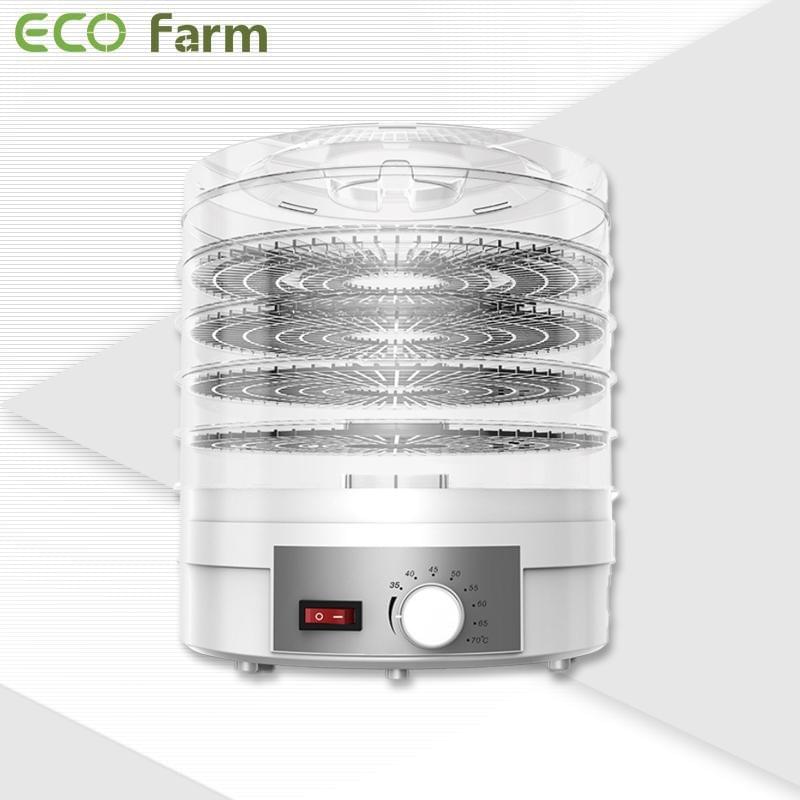
Save Time, Money, and Space
How long does it take to dry medicinal plants? Typically it can take a week or more until it’s fully dried. Not to mention, drying medicinal plants takes up a lot of valuable space. Space that could be used to expand your grow.
Why not save time, space, and ultimately money when you’re drying your medicinal plants? ECO Farm takes up a little over one square foot and can dry at least 6 ounces in that small space.
The ECO Farm dryer provides a controlled drying environment, meaning your medicinal plants is perfectly dried in less time than it takes to hang dry. All while retaining potency, terpenes, and flavor.
Trimming
Once your bud has been properly dried, it's time for trimming and curing. The goal with trimming is to remove the excess sugar leaves that, while consumable and excellent for making edibles or concentrates, have a lower trichome concentration than flower, and typically make for a harsher smoke.
To trim your buds, hold them by a stem and gently cut away the sugar leaves and stems surrounding them. Trim over a screen to collect trichomes that break off the plant, and handle your bud with extreme care. Try to trim the crow's feet — the leaves around the bottom of a bud — as closely as possible without doing damage. All contact with the bud can cause trichome loss or damage. Hold your plants and branches by the stem whenever possible. A best trimming machine can help you more.
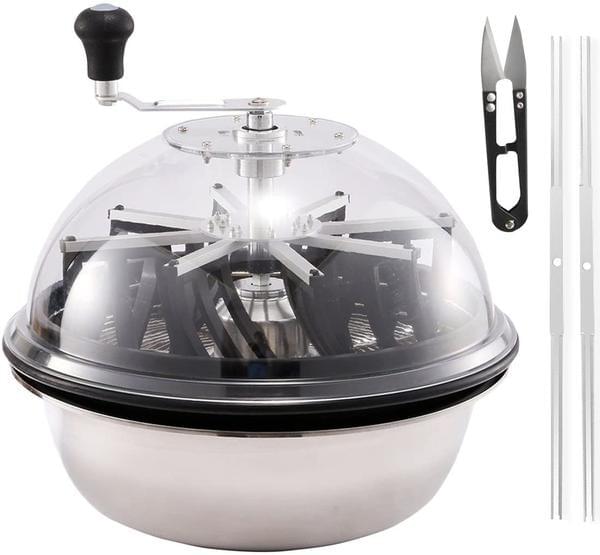
- Material and Includes: Acrylic transparent cover, 24* black rubber strip and black rubber ring, stainless steel mesh and basin(16inch), 4* rubber column, 1* serrated blade for dry trim, 1* straight blade for wet trim, 1*scissors.
- Visual Cutting: Transparent plastic cover with high transparency, easy to observe the cutting situation. The cover made of acrylic is strong and firm.
- Function: Trim twigs and remove leaves (hydroponic)
- Powerful Scissors: Harness the power of 30 scissors in 1 unit
- Highly quality: Come with sharp blade make clean quality cuts and minimize the damage done to the plants.
WHY CURE YOUR CANNABIS BUDS?
Patience is a virtue in all areas of life, and it certainly pays off when curing cannabis. Curing is a prolonged process that can take weeks to complete. It might seem like a hassle at first, but the reality is that curing will turn harsh buds into ones that offer a smooth and delicious smoke. This is because prolonged curing leads to the degradation of byproducts produced by the drying process, such as sugars. These molecules leave a particularly harsh and unpleasant taste in the mouth. Curing banishes these compounds, resulting in a buttery smooth smoke.
Curing also preserves desirable flavours. The molecules that give cannabis strains their intense and unique flavours are known as terpenes. These volatile compounds can degrade easily under high heat, so gentle drying followed by prolonged curing is the way to go for tasty buds.
Taste isn’t the only thing that curing can accomplish. The process can also enhance the high itself. THC, the active psychotropic constituent in cannabis, degrades over time into a cannabinoid known as CBN. CBN is thought to be mildly psychoactive, but is associated with different effects than THC.
Curing will also greatly enhance the shelf life of your harvest and further minimise cases of mould. If cured and stored correctly, your buds can last for a year or longer without any decline in taste or strength.
Cannabis Curing Increases Potency
Why bother going through the entire growing and harvesting process unless you’re intent on getting the most potent weed possible?
During a process known as biosynthesis, cannabis plants produce tetrahydrocannabinolic acid (THCA) and other cannabinoids. The process involves certain compounds getting converted into different blends. For instance, THCA becomes THC during this process.
Failure to properly cure weed means it ultimately contains a lower level of THC and other cannabinoids. When you cut down your cannabis, make sure it is kept in temperatures between 60 and 70 degrees Fahrenheit.
It is also essential to maintain a humidity level between 45% and 55%. By doing this, you facilitate the biosynthesis process and ensure your crop is laden with THC.
Curing Affects Flavor and Quality of Smoke
In case you didn’t know, the pleasant and unique smell and flavor of cannabis you experience are due to its terpene content. However, these volatile and fragile compounds are in danger of evaporating and degrading even at very low temperatures. Companies that mass produce low-grade marijuana often use a rapid-fire hot cannabis drying process.
For better quality bud, use a slow curing process to preserve the terpene content.
When marijuana is poorly cured, it creates the ideal environment for enzymes and bacteria to break down unwanted materials. It also results in the breaking down of the unhealthy sugars formed when chlorophyll decomposes. These sugars and minerals are what cause the unpleasant throat-burn you sometimes get from smoking.
Curing Preserves Your Cannabis
If you intend to store your cannabis for a long time, high-quality curing of the weed is essential. When you cure the plant correctly, you can store it in an airtight container for approximately two years without a significant loss in potency. Otherwise, it will lose its cannabinoid content and become more susceptible to mold growth.
How to Dry and Cure Your Cannabis?
Learning how to dry and cure cannabis buds is an art form. If you live in a coastal region, it is hard to dry cannabis quickly. This is because of the high nighttime humidity in such areas. Marijuana in these locations is at high risk of mold attack. So, the best time to try and dry weed quickly is in winter or fall.
If you live in a warmer climate or an area at high elevation, e.g., Denver, it’s a different situation. In Arizona and Nevada, the temperature can range from 28-115 degrees Fahrenheit during the year, with mainly low humidity levels. Denver is located at 5,000+ feet elevation with a temperature range of 0 degrees Fahrenheit (and lower) to over 100 degrees in summer. For residents of such areas, particular attention has to be paid to the drying and curing process.
Ideally, a cannabis bud will react similarly to a marshmallow when squeezed between your fingers. If it is excessively dry, it will fall apart and become a dry powder. While it is relatively easy to dry and cure small amounts, there is a greater challenge associated with commercial quantities. Don’t assume that there is a particular temperature, elevation, or humidity level you need to aspire to.
Even so, your drying room must be well ventilated with lots of filtered, fresh air coming in from outside. You will also need to take measures to ensure correct odor control for exhausted air.
Dry at temperatures between 60 and 70 degrees Fahrenheit to preserve terpenes. Combined with poor airflow, an excessively low temperature results in cannabis with a high chlorophyll level.
Growers like to water cure, freeze-dry, or dry ice cure their plants. However, in this guide, I will focus on a tried and trusted drying and curing method.
A Few More Thoughts on Cannabis Drying and Curing
When marijuana sale and possession was illegal everywhere, growers paid little attention to the processes of curing and drying. The objective was to raise, dry, cure, and sell weed as soon as possible, which meant that crucial processes were neglected. This explains the very low quality of the product that was once available from street sellers.
Today, the competitiveness of the cannabis industry means that producers have no choice but to invest their effort, time, and money in drying and curing. The process requires no special equipment, and most growers do it at home with the tools they already have on hand.
For the best and most flavorful product, be sure to start the curing process as quickly as possible after the buds are harvested. If you put things off, the quality of the weed will be significantly reduced. There’s a narrow margin between over- and under-drying, and with practice, you’ll learn how to get things right. The most fragrant buds begin with high-quality seeds from a reputable seed bank. Visit us at i49.net to get started on your next cannabis crop!
Replies