How To Choose A Leash And Dog Collar
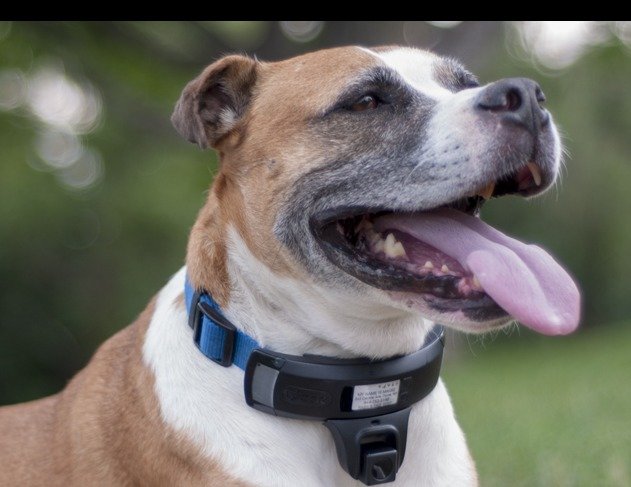
The basic equipment of each dog is a leash, collar, basket and possibly harness. There are thousands of different types and designs on the market, but a beginner often loses in what to choose to suit the dog and himself. How to choose basic aids?
If you are buying a puppy, then you have to count on the fact that you will at least buy the dog leash collar and basket several times depending on how the puppy grows. The dog should get used to the collar and the basket since childhood, so that in adulthood with their deployment and wearing problems. This is a problem that owners-beginners often face.
The collar and the basket should be the same for the dog as they wear. Both are needed for everyday life with a dog, so the dog should take it as a normal thing.
The collar is the base
Collars are on the market a wealth of when you go to the nearest pet store, you'll find tick collar for dogs full shelves. Collars can be divided according to the material from which they are made:
Leather - a classic you can never spoil anything. Mostly they are on the buckle, few are seen as pulling.
Metal - so-called chain ones are mostly designed for training, thanks to their durability they are also suitable for casual wear. There are one, two or three-row, with small or large mesh.
Textile - today mostly made of synthetic fibers (nylon), mostly fastening to plastic buckles. They are their weakest link, because in larger breeds can break when jerking. On the contrary, the advantage of textile collars is that they are lightweight and can be produced in virtually any width, color and finish.
Of course, it is also necessary to take into consideration the selection of the dog's body and the type of coat. For dogs with a long thin neck, such as greyhounds, thin metal collars are unsuitable because they excessively strain their cervical spine and may be damaged.
Some breeds with a longer fine hair have a problem with chain collars, because they entangle them and pulls them out. Which also applies to some leather collars.
For training metal chain

Especially they have to choose cytologists who practice with their dogs. In terms of functionality, there are three types of collars:
Fixed - with a fixed diameter, mostly fastening to a classic metal buckle (leather) or plastic buckle (textile).
Slip-on - mostly metallic with a basic diameter slightly smaller than ideal for a dog. The ends of the rigid chain are ended with loops, through which one simple chain is threaded. The diameter is such that the dog's collar was comfortable to put on, after the leash was clipped, it was partially retracted so that the dog could not pull itself off the collar. The collar should tighten around the neck of the dog, but do not choke it.
Drawstring - this is usually a single- or double-row chain with ends at the end. Passing the chain through one of the meshes creates a loop (the other eye does not pass through the first). The collar can be easily put on the dog, it will be withdrawn after the guide is attached. There is a danger that the dog may start choking on the collar. Therefore, it belongs only to the experienced handler and only for really special purposes, such as training unmanageable and dangerous dogs.
Replies