Firecraft Fundamentals: Bushcraft Terminology for Fire Making
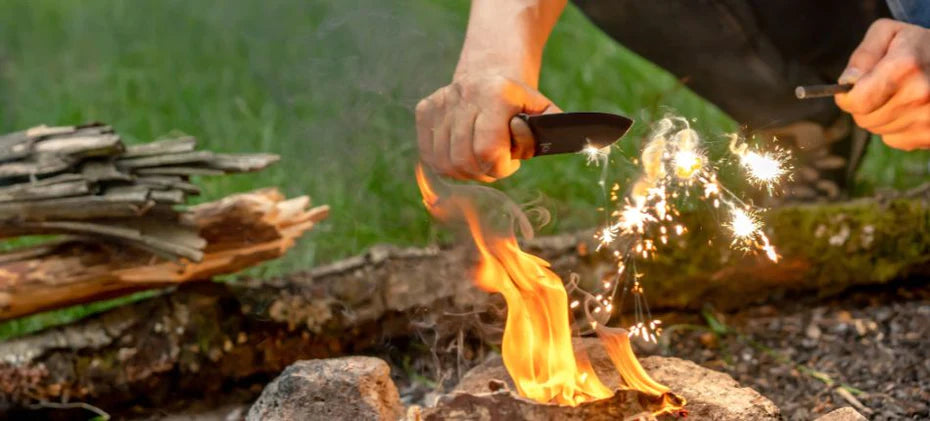
Mastering the art of firecraft is a cornerstone of bushcraft and wilderness survival. Understanding key bushcraft terminology not only helps in acquiring essential skills but also in effectively communicating techniques. In this article, we will explore fundamental terms and techniques related to fire making, including Feather Sticks, Firesteel, Bow Drills, and others, to provide a comprehensive overview of this vital skill.
Feather Stick: A Handy Firestarter
A Feather Stick is one of the simplest yet most effective tools in firecraft. Created by shaving thin curls of wood from a dry stick, this tool serves as an excellent firestarter when kindling or tinder is scarce. The fine shavings catch fire quickly, while the remaining stick provides a slow burn, making it ideal for igniting larger pieces of wood.The key to making a Feather Stick lies in selecting dry, straight-grained wood and using a sharp knife to create the curls. This technique is especially useful in wet environments where finding dry tinder can be a challenge.
Firesteel: A Spark in Your Pocket
Firesteel, also known as a ferrocerium rod, is a reliable and portable fire-starting tool. It works by striking the rod with a hard metal scraper, generating high-temperature sparks capable of igniting fine tinder. Firesteel is highly durable and functions even in adverse weather conditions, making it a favorite among survivalists. To effectively use Firesteel, prepare your tinder bundle beforehand. Hold the rod close to the tinder and strike it with a consistent motion to direct the sparks onto the material. With practice, this method can become one of the quickest ways to start a fire in the wild.
Bow Drill: Mastering Primitive Firecraft
The Bow Drill is a traditional fire-starting method that relies on friction to generate heat. This technique involves a bow, a spindle, a fireboard, and a socket. By rapidly spinning the spindle against the fireboard, heat builds up, producing a glowing ember that can be transferred to tinder to create a flame. While the Bow Drill requires skill and effort, it is an invaluable tool for survivalists and bushcrafters. Understanding the importance of dry materials and proper technique is essential for success. The Bow Drill embodies the spirit of self-reliance and the mastery of primitive skills.
Tinder: The Heart of Fire Making
Tinder refers to any material that easily catches a spark or flame. Examples include dry grass, bark shavings, cotton balls, and char cloth. In firecraft, having an adequate supply of tinder is crucial, as it acts as the intermediary between the spark or ember and the kindling. Preparing your tinder properly can make or break your fire-making efforts. It should be dry, fluffy, and arranged to maximize surface area for the spark or ember to ignite.
Kindling and Fuelwood: Building the Blaze
Kindling is the next stage of materials used to build a fire after the tinder has ignited. Thin twigs, dry branches, or split wood are commonly used as kindling. Once the kindling is burning steadily, larger pieces of wood, known as fuelwood, can be added to sustain the fire. Understanding the progression from tinder to kindling to fuelwood is vital for efficient fire-building. Ensure all materials are dry and appropriately sized for each stage of the process.
Tinderbox: A Survivalist’s Essential
A Tinderbox is a container used to store fire-starting materials such as tinder, char cloth, and a Firesteel. It ensures that you always have dry and readily accessible materials to start a fire, even in challenging conditions. Modern versions of tinderboxes often include waterproof compartments, making them an indispensable tool for bushcrafters.
Char Cloth: The Ember Keeper
Char cloth is a fabric that has been charred in the absence of oxygen to create a material that easily catches a spark. It is often made from 100% cotton and is a staple in many bushcraft kits. Char cloth is typically used in conjunction with a Firesteel or flint and steel. By catching a spark and smoldering slowly, char cloth provides a reliable way to transfer heat to tinder. It is a testament to the ingenuity of traditional fire-making methods.
Conclusion
Firecraft is a blend of knowledge, skill, and practice. Understanding the terminology and techniquessuch as Feather Sticks, Firesteel, Bow Drills, tinder, and char cloth—empowers individuals to confidently create fire in various situations. Each method and tool has its strengths, and mastering them enhances both survival readiness and the enjoyment of bushcraft adventures.
Replies