Everything You Need to Know About Dental Implants
A healthy and beautiful smile is not only aesthetic, but also a guarantee of overall health and self-confidence. However, tooth loss can occur for various reasons: injuries, tooth decay, gum disease, or age-related changes. In such cases, dental implants can help. They are one of the most modern and effective solutions in dentistry. In this article, we will tell you everything you need to know about dental implants: from design to contraindications and aftercare.
What is a dental implant?
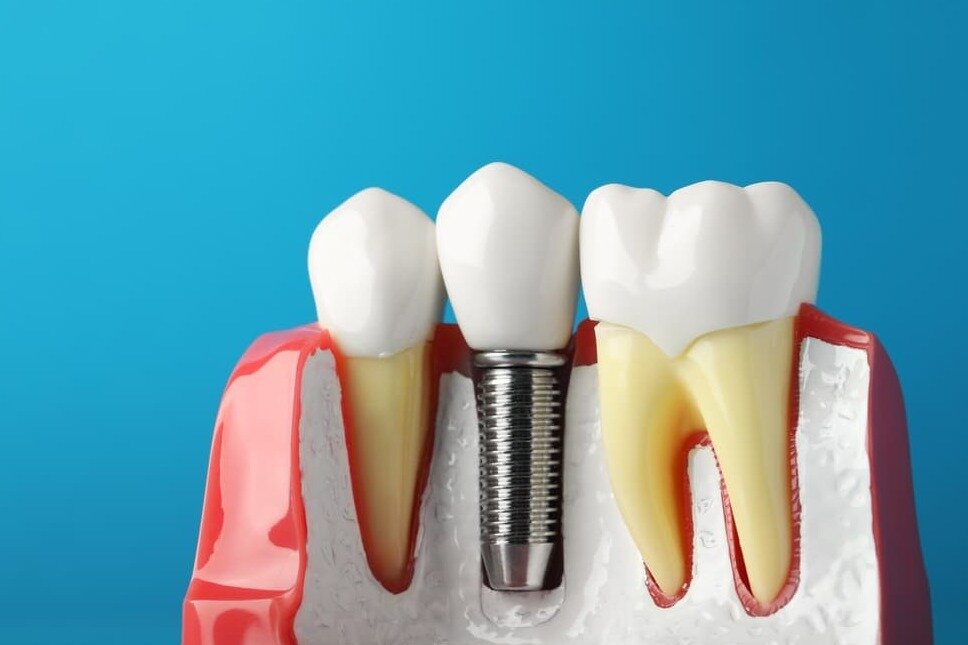
A dental implant is an artificial tooth root, usually made of titanium, which is implanted into the jawbone. After the process of osseointegration, an abutment (connecting element) is attached to it, and then a crown that imitates the appearance of a real tooth. Thus, the implant replaces the lost tooth both externally and functionally.
Advantages of dental implants
Implantation has many advantages compared to other methods of tooth restoration:
- Durability. With proper care, implants can last for decades and sometimes a lifetime.
- Preservation of neighboring teeth. Unlike bridges, implants don’t require grinding of adjacent healthy teeth.
- Aesthetics. Implants look and feel like real teeth.
- Improved speech and chewing ability. They sit securely and don’t slip in the mouth like removable dentures.
- Preservation of bone tissue. The implant stimulates the jawbone, thereby preventing its atrophy, which occurs after tooth loss.
Stages of implantation
Implantation is not a one-time procedure. It consists of several stages:
- Consultation and diagnostics. The doctor assesses the general condition of the oral cavity and performs a CT scan (computed tomography) to assess bone density and volume.
- Preparation. If necessary, gum treatments, removal of damaged teeth, and bone grafting are performed.
- Implant installation. A titanium screw is implanted in the jaw under local anesthesia. This process takes 30-60 minutes.
- Osseointegration. The implant takes root within 3-6 months and fuses with the bone.
- Installation of abutment and crown. After healing, an abutment is inserted, and then a custom-made crown.
Types of implants
Endosteal implants are the most common type of dental implant, shaped like a small screw or blade, placed in the jawbone to hold prosthetic teeth. They are recommended by doctors if you already have dentures or bridges.
Subperiosteal implants are placed on or above the jawbone, using a metal post under the gum to hold it in place. They are suitable for those who cannot wear regular dentures, have insufficient natural jawbone for endosteal implants, or prefer not to undergo bone augmentation.
Contraindications to implantation
Despite its high effectiveness, implantation is not suitable for everyone. There are contraindications:
- General: Oncology, severe forms of diabetes, blood diseases, and immunodeficiencies.
- Local: lack of bone tissue (no possibility of reconstruction), inflammation of the oral cavity.
- Temporary: pregnancy, acute infections, smoking (significantly reduces the likelihood of transplantation).
A comprehensive diagnosis and consultation with a doctor are required before the procedure.
Dental implant care
Implants require the same (or even more) care as natural teeth:
- Brush your teeth twice a day with a soft brush
- Use dental floss and mouthwash
- Visit the dentist twice a year
- Undego professional teeth cleaning every 6 months
- Quit smoking and limit sugar consumption
The implant is not susceptible to tooth decay, but inflammation of the surrounding tissues called peri-implantitis can lead to its loss. Therefore, hygiene is essential.
Frequently Asked Questions
How much does a dental implant cost?
The price depends on the brand of the implant, the clinic, and the complexity of the case. On average, it is between $3,000 to $6,000, per tooth.A full set of dental implants can cost ranging from $20,000 to $60,000, depending on the number of teeth to be replaced and the difficulty of the case.
Does it hurt?
The installation is performed under anesthesia. Postoperative pain is usually minimal and is easily relieved with painkillers.
Is it possible to insert an implant immediately after a tooth extraction?
In some cases, immediate implantation is possible if the bone condition allows.
The bottom line
Implantation is a modern, reliable, and aesthetic solution for tooth loss. It is essential to choose an experienced dentist, have all the necessary examinations performed, and take care of your health responsibly.
Replies