Do You Really Need to Floss? The ADA Weighs In
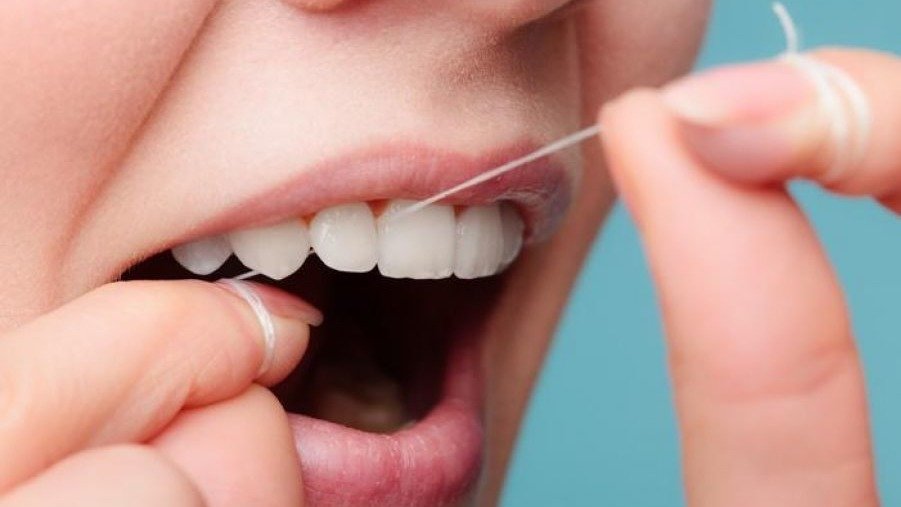
Don’t throw away your dental floss just yet.
Yes, earlier this year, the U.S. Dietary Guidelines removed their recommendation for daily flossing since the health benefits have never been proven.
Yes, according to the Associated Press, a deeper analysis of 25 studies that compare tooth-brushing and flossing with tooth-brushing alone found “weak, very unreliable” evidence supporting the benefits of flossing with a “moderate to large potential for bias.”
However, despite this news, experts are still standing by their advice. We asked Dr. Alex Khabensky, DDS, a consumer advisor for the American Dental Association and a dentist in private practice in Brooklyn, New York for his opinion on the altered guidelines and the media craze that followed. Here is what he said.
The lack of good studies is due to a lack of need
“Currently, there isn’t a lot of long-term evidence regarding the pro or con of flossing,” says Khabensky. That’s because this recommendation was made years ago before there was a lot of scientific evidence regarding these things, and nobody has put in the effort to catch up on the research.
“When you compare the United States to many other countries, our oral health is in a good place, people in the U.S. not only live longer but keep their natural teeth well into old age”
“I think it’s good that our medical experts are investing more into cancer research and other useful things as opposed to spending money and time on dental floss research,” Khabensky adds.
Flossing does things that brushing can’t
Our mouth has over 500 species of bacteria so in order to prevent tooth decay and gum disease, it’s all about lowering the number of bad bacteria as much as possible. A good way to achieve this is to avoid food sources that give us some of that bacteria.
Brushing is a good way to remove that bacteria from the teeth themselves. However, no matter how good your brush, you will still leave food particles in between the teeth. “This is where flossing comes in, it can remove bacteria from places that brushing doesn’t reach.”
Flossing has shown to decrease inflammation
“Inflammation is your body’s response to all these bacteria in your mouth. Think of it as a defense mechanism to block things that may be harmful,” says Khabensky. “We all know that inflammation isn’t good for our general health, and having a process that can remove the inflammation causing bacteria - is a step in the right direction.”
Inflammation is a big contributor to many types of chronic disease, so the ongoing research on inflammation can really strengthen the link of overall health and good oral hygiene, flossing included. One study conducted in 2012 found that flossing was able to decrease inflammation throughout the body.
Many potential benefits with a low cost
Dental floss is cheap and can be found at any drug store. The process of flossing may not be fun, yet it’s very quick to do and is painless for most people. There are also single-use plastic dental-floss picks available for those who absolutely hate regular flossing.
Although it’s best to floss once a day, every day, skipping this process every now and then won’t be the end of the world. “Even flossing sometimes is already a step towards better oral hygiene and is better than never.”
Replies