Bug Control Tips You Can Not Manage Pests Without
Let's face it, no matter how careful or clean you are, pests can still make their way into your home. Pests can range from small things like mice and ladybugs, to bigger animals such as scorpions and mice. The following article will discuss some common methods you can use to take pest control into your own hands.
Try a do-it-yourself spray. If you can't afford to have a professional service come out to spray your home for pest prevention, try any of the number of pest control sprays available at local hardware and box stores. Most come in easy-to-use bottles with trigger spray nozzles that allow you to spray around the foundation and windows of your home, both inside and out.
Mice enjoy eating grains and cereal. This is something you have to make sure you don't leave lying around in your kitchen. Mice will sink their teeth into almost anything! If having mice in the home is common for you, remove the food supply and place them in high cabinets and use sealed containers. They have a fantastic sense of smell, so don't underestimate these little critters.
If you are having a pest control problem at your home, take a look at your garbage for clues to why this is happening. Garbage needs to be in air tight bags and disposed of on a regular basis. Keep your trash outside your home and not inside your kitchen to reduce the chances of having a pest problem.
Try using simply click the following website page that catch them as they walk if you have a brown recluse problem. These spiders are poisonous and hard to reach using chemicals. When night falls, these spiders look for food. Put the traps behind furniture to get them where they live.
Borax powder is known as a natural pest control. It can be used to rid your home and yard of many different kinds of insects, including roaches and ants. Avoid using borax around children and pets. Instead, place borax along baseboards and under cabinets to quickly rid your home of these pests.
If there are rats and mice in your area, don't make the mistake of planting fruit trees near the house. Rodents can climb up them and go into your house by way of the attic. Therefore, you should plant trees a minimum of 15 feet away.
If you live in a home that has pests in it, make sure that you call and exterminator before you move to a new home. Many people fail to do this and they end up carrying bugs with them to their new places. This means you will have the same issue all over again in a new place.
If you locate a hole for mice in your wall or floor, then cut out small chunks of a product known as steel wool and clog the holes. The rodents will try to eat through the steel wool and it will kill them. Therefore, use wood putty that is mixed with a little steel wool in order to prevent rodents from coming in your home.
Search your attic for any holes in the foundation or in the insulation. You may not hear them, but mice can be living in your attic without your knowing. Simply take a look around a few times a year for any tell tale signs can help you stave off larger infestations.
To ensure that pests do not come near your food, you must properly store your food items. Glass and plastic containers with air-tight lids are ideal. Don't use paper bags or cardboard since pests can easily get through these substances.
If you have firewood, make sure that it is stored a decent amount of feet away from the house. Bugs will inhabit this wood, so you will want it as far away from the house as possible. Try to expel all the items that bugs will feast on from your home.
Sprinkle boric acid, a white powdery substance, into cracks and crevices around your home to keep roaches at bay. The powder sticks to the roaches, and they ingest the poison as they clean themselves. You can also mix the powder with sugar to bait them. Avoid spreading the powder in areas that children or pets can access.
Pesticides are very efficient but these products are harmful for the environment. If possible, use cleaner methods to get rid of your pest. A lot of home remedies work and there are some efficient products on the market that contain a low amount of chemicals. This is the best approach if you have pets or young children in your home.
https://phys.org/news/2018-06-diabolical-crop-pests-north-carolina.html can have devastating effects on the environment. You should carefully assess the risks before using these products. Do not use pesticides if you are located near a stream or a place where children play. If you use a pesticide inside your home, open the windows to let the toxic chemicals out.
Bee stings are painful, and can even be fatal for some people. Make sure bees do not build a nest on or near your home. If you notice bees near your home, check to make sure they are not building a nest. Wasp spray can be used from a distance to kill the bees before you remove the nest.
Put your pet food into containers that are airtight. There are few things more attractive to pests than poorly contained pet foods. many people simple scrunch up the top of the bag and leave it in their garage! That's quite the pest invitation. Instead, get your pet food into an airtight container, so pests will be none the wiser.
Fleas are highly attracted to dust, so it is important that you dust as often as you can. This kills the adult fleas and stops their life cycle. Be sure that you are dusting off places where fleas are commonly found, like cat and dog beds, carpets, and furniture your pet lays on.
Make sure you try to keep termites out of your home before the invasion begins! Grab a caulking gun and seal off any and all holes. Most holes they enter through are doors and window frames. Also make sure you keep the foundation of your home safe by sealing cracks and gaps there as well.
Believe it or not, there is big business in bugs. However, you can solve many issues if they're addressed early. If your pests return, take a look at the guidelines in this article again. You won't need a costly exterminator if you are able to deal with the problem quickly. Practice pest control on a regular basis, and you can live in a clean environment.
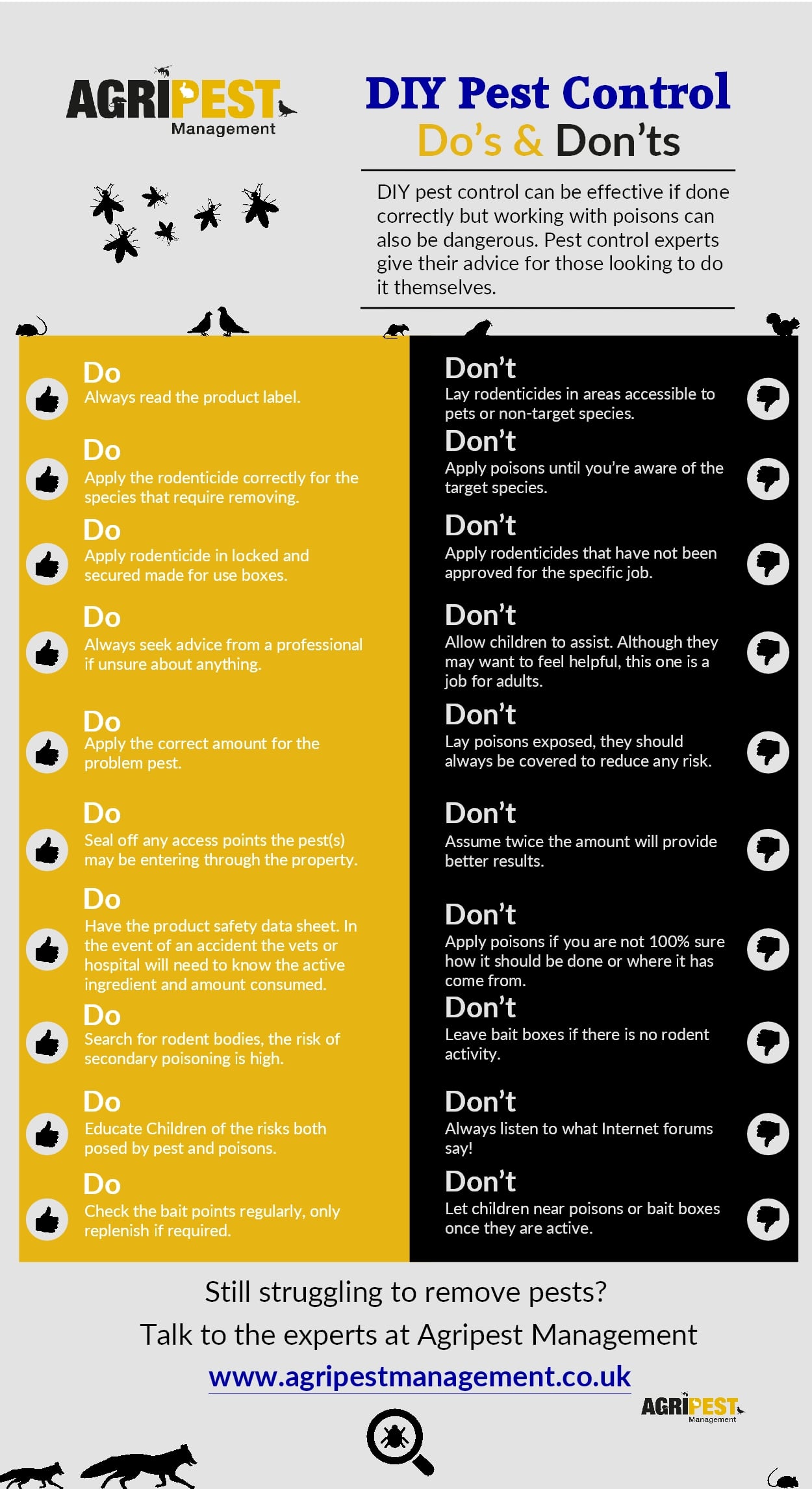
Try a do-it-yourself spray. If you can't afford to have a professional service come out to spray your home for pest prevention, try any of the number of pest control sprays available at local hardware and box stores. Most come in easy-to-use bottles with trigger spray nozzles that allow you to spray around the foundation and windows of your home, both inside and out.
Mice enjoy eating grains and cereal. This is something you have to make sure you don't leave lying around in your kitchen. Mice will sink their teeth into almost anything! If having mice in the home is common for you, remove the food supply and place them in high cabinets and use sealed containers. They have a fantastic sense of smell, so don't underestimate these little critters.
If you are having a pest control problem at your home, take a look at your garbage for clues to why this is happening. Garbage needs to be in air tight bags and disposed of on a regular basis. Keep your trash outside your home and not inside your kitchen to reduce the chances of having a pest problem.
Try using simply click the following website page that catch them as they walk if you have a brown recluse problem. These spiders are poisonous and hard to reach using chemicals. When night falls, these spiders look for food. Put the traps behind furniture to get them where they live.
Borax powder is known as a natural pest control. It can be used to rid your home and yard of many different kinds of insects, including roaches and ants. Avoid using borax around children and pets. Instead, place borax along baseboards and under cabinets to quickly rid your home of these pests.
If there are rats and mice in your area, don't make the mistake of planting fruit trees near the house. Rodents can climb up them and go into your house by way of the attic. Therefore, you should plant trees a minimum of 15 feet away.
If you live in a home that has pests in it, make sure that you call and exterminator before you move to a new home. Many people fail to do this and they end up carrying bugs with them to their new places. This means you will have the same issue all over again in a new place.
If you locate a hole for mice in your wall or floor, then cut out small chunks of a product known as steel wool and clog the holes. The rodents will try to eat through the steel wool and it will kill them. Therefore, use wood putty that is mixed with a little steel wool in order to prevent rodents from coming in your home.
Search your attic for any holes in the foundation or in the insulation. You may not hear them, but mice can be living in your attic without your knowing. Simply take a look around a few times a year for any tell tale signs can help you stave off larger infestations.
To ensure that pests do not come near your food, you must properly store your food items. Glass and plastic containers with air-tight lids are ideal. Don't use paper bags or cardboard since pests can easily get through these substances.
If you have firewood, make sure that it is stored a decent amount of feet away from the house. Bugs will inhabit this wood, so you will want it as far away from the house as possible. Try to expel all the items that bugs will feast on from your home.
Sprinkle boric acid, a white powdery substance, into cracks and crevices around your home to keep roaches at bay. The powder sticks to the roaches, and they ingest the poison as they clean themselves. You can also mix the powder with sugar to bait them. Avoid spreading the powder in areas that children or pets can access.
Pesticides are very efficient but these products are harmful for the environment. If possible, use cleaner methods to get rid of your pest. A lot of home remedies work and there are some efficient products on the market that contain a low amount of chemicals. This is the best approach if you have pets or young children in your home.
https://phys.org/news/2018-06-diabolical-crop-pests-north-carolina.html can have devastating effects on the environment. You should carefully assess the risks before using these products. Do not use pesticides if you are located near a stream or a place where children play. If you use a pesticide inside your home, open the windows to let the toxic chemicals out.
Bee stings are painful, and can even be fatal for some people. Make sure bees do not build a nest on or near your home. If you notice bees near your home, check to make sure they are not building a nest. Wasp spray can be used from a distance to kill the bees before you remove the nest.
Put your pet food into containers that are airtight. There are few things more attractive to pests than poorly contained pet foods. many people simple scrunch up the top of the bag and leave it in their garage! That's quite the pest invitation. Instead, get your pet food into an airtight container, so pests will be none the wiser.
Fleas are highly attracted to dust, so it is important that you dust as often as you can. This kills the adult fleas and stops their life cycle. Be sure that you are dusting off places where fleas are commonly found, like cat and dog beds, carpets, and furniture your pet lays on.
Make sure you try to keep termites out of your home before the invasion begins! Grab a caulking gun and seal off any and all holes. Most holes they enter through are doors and window frames. Also make sure you keep the foundation of your home safe by sealing cracks and gaps there as well.
Believe it or not, there is big business in bugs. However, you can solve many issues if they're addressed early. If your pests return, take a look at the guidelines in this article again. You won't need a costly exterminator if you are able to deal with the problem quickly. Practice pest control on a regular basis, and you can live in a clean environment.
Replies