Baby Grand Piano - What you need to know
It is thanks to Cristofori of Padua, Italy, that we have pianos today. And that was around the year 1700. Still three of his pianos survive today! and are dated on 1720, almost 300 years. Not bad, uh?
But you are here for the baby grand piano information, not a history lesson. Just let us mention that Baby piano is the flat configuration (one of the two most famous) of this beautiful instrument. The other one is the upright piano, which we will talk about in another post.
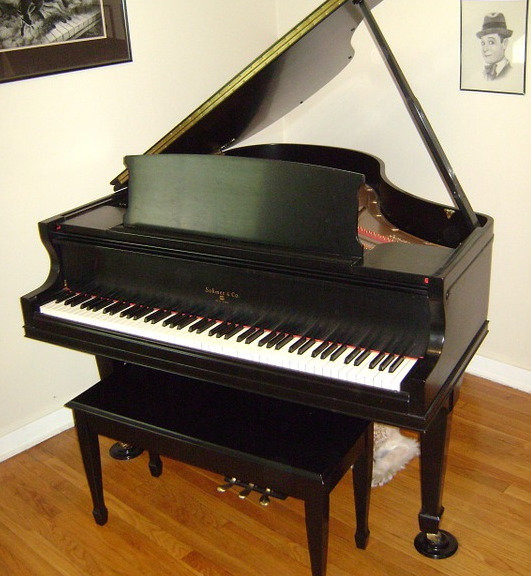
Size does matter
Regarding the size, there are many over the years, and as you can imagine, the Baby is the smaller one. “Grand” refers originally to meant large, so any piano with long enough strings is considered Grand.
Today, the size of a Grand Piano is around 6 or 7 feet long. Anything larger than that is considered a Concert Piano, and our Baby Grand Piano refers to smaller one, being its size around 5 feet long.
This difference in size also creates a difference in the sound it produces. A Grand Piano has longer strings, so it has a richer, deeper and louder sound. The sound is produced with more resonance.
Where to place a Baby Gran Piano on the house?
Are you looking to buy a Baby Grand? First, look at your house.
A Baby Grand Piano is not a piece of furniture. Is a piece of art. It must be placed in a room not too hot, not too cold, too damp or left unprotected. All of this will lead to tuning problems and expensive maintenance.
The temperature of the room where the piano will be placed has a big effect on the components. Humidity will warp the soundboard and rust on the tuning pins and piano strings.
If the air is too dry can damage the wood and cause joints to begin separating. Those joints are glued and are affected by the air.
You will need to manage humidity with dehumidifiers or humidifiers (depends on your weather) and also, could use some devices to alert you the changes on it.
Where not to put your Baby Grand Piano: on the path of direct sunlight, or blowing air. Also, avoid walls with unsealed parts and definitely keep it apart from radiators and fireplaces.
How often is needed to tune it?
Tuning your piano is one of those things that is not the same for everyone. It will depend on how much do you play and, as we talked before, the room where the piano is. We can say that one or twice a year is a rule of thumb. And let it be done by a professional unless you are expert and confident enough.
How to clean Baby Grand Piano?
Yes, we know that this is a big question for everyone. As the tuning, there is some part of the cleaning process that is better to left to a professional, like cleaning inside the piano.
You can make your part, avoiding the dust using a soft cloth or duster. Do not use cleaning sprays or polishes, they can cause more damage than you can image, cracking the finish and be absorbed by the wood directly.
For the keys, just use cloth and water with, if necessary, a very mild soap.
This is basic, but we need to say it: don’t place anything on your pianos like food, drinks, plants or whatever another thing you can image.
What about prices?
You can find Baby Grand Pianos in the range of $8,000 – $20,000. But if you look a brand like Steinway, those prices could rise up to $45,000. There are not much difference between new and used pianos, as depreciation on this particular items is very slow.
Alternatives
You can find more cheap, mass-produced baby grands, but there are being forgotten because some digital pianos are being superior in quality, and cost thousands less.
Just to mention a couple, there are the Yamaha P-105 and the Yamaha DGX650B.
Replies