A Guide on Proper Nasal Irrigation
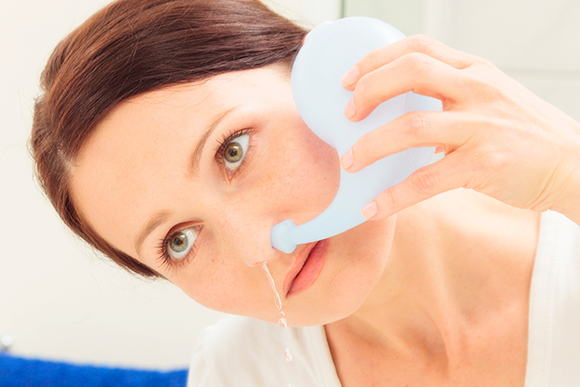
A saline nasal rinsing is one of the best ways to prevent and treat rhinitis without side effects. This method becomes especially relevant during the fall, when people start catching seasonal colds.
What is the use of saline nasal rinsing
The main purpose of the procedure is to remove mucus from the nasal cavity and moisturize the mucous membrane. A simple sprinkling of saline into the nose will keep the nasopharynx moist.
Rinsing helps remove viruses, bacteria, dust particles and other irritants from the nasal mucosa that can cause allergic rhinitis. Nasal irrigation cleans the nose of accumulated mucus and flushes out pathogenic microflora, helps to strengthen the walls of small capillaries of the mucous membrane, which increases local immunity.
Dry air during summer can also cause discomfort in the nose. Moisture just evaporates from nasopharynx and nasal hair irritates the mucous membrane. Therefore, it is very important to humidify the room, but it is even more important to moisturize the nasal mucosa.
Nasal rinsing for a runny nose
A runny nose is an unpleasant symptom in ARVI, but it is a protective mechanism of the human body. The mucosal glands in the nose produce snots., which envelop dust particles, various allergens and become a barrier for viruses and bacteria. While the disease progresses, too much mucus in nostrils is produced, so the inflammation begins. It becomes difficult to breathe.
Sinus rinsing reduces the inflammation and swelling, so a person can freely breath with his nose. You can also use solutions of drugs with antibacterial components, which will enhance the therapeutic effect, but only after the doctor’s recommendation.
When you can rinse your nose
Rinsing the nose with saline is recommended both for prevention and treatment of flu and acute respiratory viral infections, and in case of sinusitis, allergic or vasomotor rhinitis. Also, the use of sea salt for irrigating can be helpful when septum is curved. This procedure will help to prepare for rhinoplasty.
Contraindications for sinus flush
You can not irrigate the nose during acute otitis media. Irrigation is also forbidden when there are neoplasms in the nasal cavity. Individual intolerance to the solution, and frequent nosebleeds are contraindications as well. It is not recommended to do sinus flush during severe nasal congestion and before going outside. Don’t irrigate the nose of your kid before he or she is 2 years old.
How to make rinsing liquid at home
Pharmacies offer a wide range of nasal rinsing solutions. Such medications are quite expensive, but they are sold in disposable systems designed for a comfortable procedure.
In case you have an irrigator, or a syringe you may prepare the solution at home. You will need 1 liter of boiled water and 2 teaspoons of ordinary or sea salt. For children, it is a quarter teaspoon of salt in a glass of water. It is important not to oversaturate the water with salt, since with an increased salt concentration a mucosal burn is possible.
How to properly rinse your nose
Saline rinsing is done over a sink or a bath. Before the procedure, you need to blow your nose thoroughly. Pour the solution into a syringe, a special bottle for rinsing the nose or an irrigator. Inhale, slightly your mouth and don’t breathe. Then mildly burst the saline into your nostrils. Some people prefer to blow a strong current, so it goes out from another nostril, but this shouldn’t be done with children.
Remember, that excess solution will drain the nasal mucosa, so if you feel burning sensations, stop the procedure immediately. And it is not recommended to go outside right after rinsing. A positive result will be achieved only if the procedure is carried out correctly. Therefore, it is better to consult with your ENT doctor first.
Replies