A Beginners Guide to Dowsing
Dowsing involves using tools that amplify small hand movements. Some dowsers use the traditional forked 'divining rod', which is believed to move downward when near water or lost objects. Others use L-rods which point in the direction of the object and cross when close.
Other deviceless methods include a simple body sway response, interlocking circles with the thumb and first finger or asking a question. This beautifully presented kit will teach divination basics and help you learn to heal and ask for guidance.
How to dowse
Most dowsers will tell you that it takes practice to get good at it. To begin, get centered and clear your mind. This is done by breathing slowly and deeply. Some dowsers even have specific meditation practices that they use prior to dowsing.
Some dowsers start by saying a prayer, asking for help from their guides or the gods of their tradition. They then start dowsing.
Most dowsers will use a pair of metal rods (L-rods) that can be made from copper, brass, wire coat hangers or whatever feels right to them. The dowser holds one in each hand, with the short arms of the L pointing vertically and the long arms pointing forwards. The dowser will then ask questions about the object that they are seeking, such as water or buried treasure. If the dowser gets a yes response they will then proceed to look for it. If the dowser gets 'no' they will then move on to other objects.
Pendulums
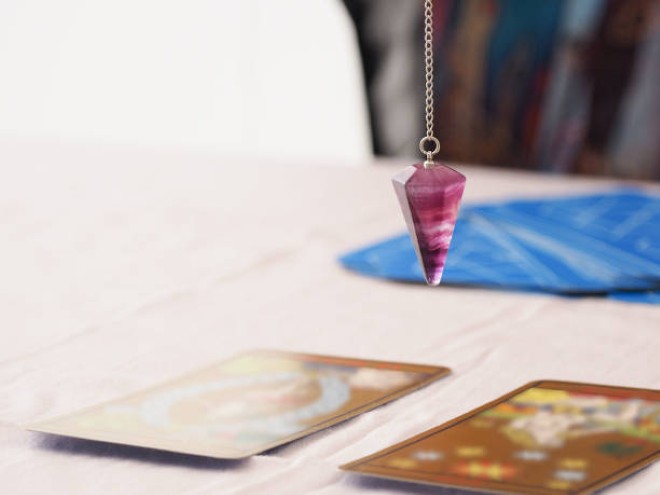
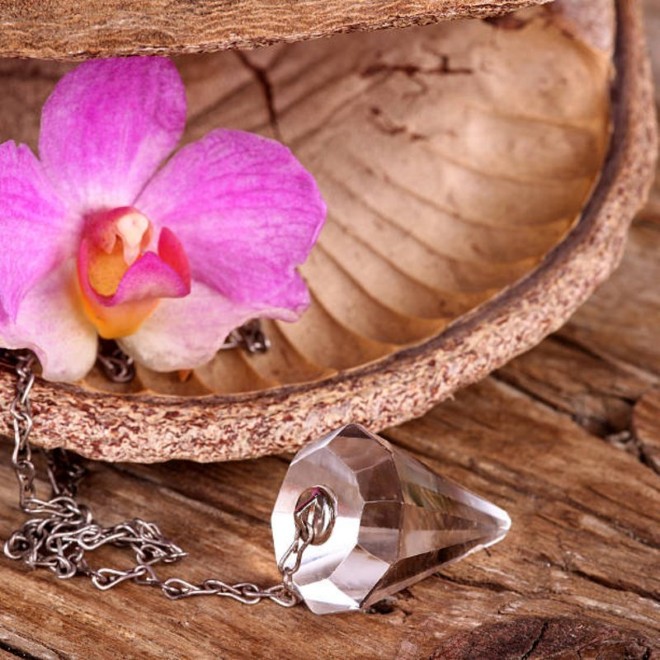
Usually made of crystal and suspended from the end of a chain, pendulums are used to answer questions or find things in the world around you. They can also be used to find ley lines, psychic phenomena or the location of lost objects.
To begin using your pendulum, it is important to cleanse and charge it. This is done by placing it on a window sill in direct sunlight for the day, then sitting quietly with it each evening while holding it by its string. This helps to acclimate you and your pendulum, building a connection between you.
Once you have found your pendulum’s Yes response (which is often a clockwise circle or an ellipse), you can ask it anything that has a clear answer, from finding a lost object to unlocking your spiritual potential and tapping into your intuition. You can also dowse for remedies, or even food to help with your health. Just be sure to avoid asking questions with a ‘Should’ word in them as this will confuse the outcome.
L-Rods
The L dowsing rods is a pendulum-like divination tool believed to enhance intuition and allow for access to deeper wisdom and spiritual forces. Crafted in the shape of an “L,” it’s a popular tool for locating underground water sources, minerals, ley lines and other spiritual energies.
It’s used by dowsers to seek answers and direction for a variety of issues such as locating utilities, finding lost objects, EMF radiation zones, geopathic stress lines, Curry lines, Hartmann radiation grid lines and more. It’s also helpful in detecting and balancing energy blockages or disruptions within the human energy field.
To use the rods, hold them parallel to each other with your arms extended in front of you. Then ask your question. If the response is yes or something that’s healthy, strengthening and good for you, the arms will move forward; a no or negative energy will cause the arms to swing backwards. The rods may also cross or show other movements that indicate a specific answer.
Maps
When someone mentions dowsing, most people immediately picture a tweed jacketed gentleman striding across the countryside clutching a forked twig in search of underground water. But there is much more to dowsing than this – it can be used to find anything from gold and water to missing pets and people.
This author specializes in map dowsing, and she explains how she works with maps to free herself from things that might interfere with her results, such as the remanence effect (information left by those who handled a map before). She also discusses how to devise a question to ask while dowsing, which involves phrasing it clearly and avoiding a desire for any particular answer.
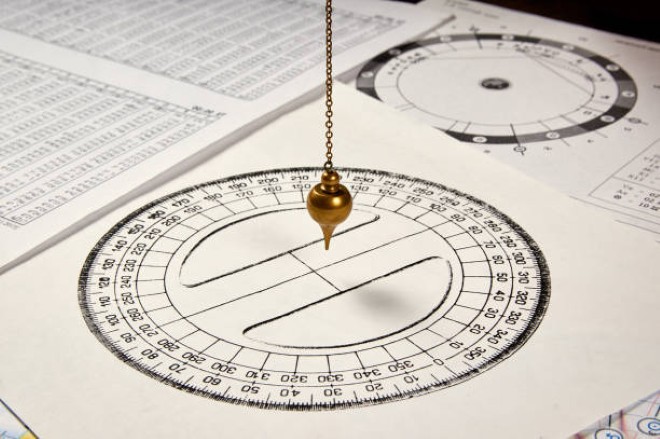
She recommends using an L-rod or a pendulum with a ruler inserted into the end, which is placed in one hand. When the pendulum begins to swing in a positive direction, slow down its movement and mark the location on the map with pencil.
Replies