7 Great Tips for Selecting the Best Grow Lights
Indoor gardening has never been easier. Grow lights for indoor plants allow you to cultivate a wide variety of plants at any climate during any time of year. These growing lights are specially designed to substitute natural sunlight, stimulating photosynthesis and providing the right color spectrum where the plant can grow and flourish. With the right fixture or bulb, you can have delicious tomatoes in the dead of winter or award-winning violets year-round.
Here are 7 Great Tips for Selecting the Best Grow Lights.
1. Light Intensity
Will the lights provide what your plants needs to thrive? This is where the science comes in. You need to have a basic understanding of the metrics. Understanding factors such as photosynthetically active photon flux (PPF), photosynthetically active photon flux density (PPFD), daily light integral (DLI) and the light spectrum is essential to optimizing the grow environment for your plants so you get the best results.
Cannabis, for example, is a light-hungry plant when blooming. Starting at low levels for cloning (200 µmols) it rapidly climbs to wanting 1,000-plus µmols in later stages. This level of intensity would torch or burn most plants, but not cannabis. If you can keep the carbon dioxide levels in parts per million above your µmol intensity, your buds will grow at their peak speed.
2. Cost
Cost is always a top concern and growers should look at both the long-term and the short-term costs. Less expensive high-pressure sodium lights might seem like the smart path but, when considering operating and maintenance costs, could end up costing more than LED lights in the long run (after one year).
The key expenses to consider are: Investment (grow lights, electrical wiring, air conditioning, automation accessories, etc.); operating cost (energy consumption by grow lights and air conditioning); and maintenance cost (consumables, such as bulbs, and labor, such as replacing bulbs).
For an idea what all these variables would mean to your operation, you can use a cost calculator, like the one at AEssenseGrows.com.
3. Electricity
Voltages can be tricky, so it’s best to talk to an electrician. The choice of voltage has a huge impact on initial building costs. Higher voltage is desirable because you can power more lights for the same current. As a rule, the lower the current draw (less amperage), the easier to install electric wiring.
Wiring, and especially circuit breakers, are limited by the amperage. This will limit the grow lights you can install, so choose carefully. High-voltage feeds (277 volts to 480 volts) are less common but offer the best scalability and are worth investigating.
Wattage is an essential component of cost because it determines how much power your grow lights consume, which translates to the size of your electric bills.
4. Waste heat
Air conditioning is another expense you’ll need to manage as you remove light-generated heat that could damage your plants. The amount of cooling needed is usually expressed in tons, with one ton of cooling being equal to 12,000 BTUs per hour. That’s enough for three HPS lights or five or six LED lights. To figure out your air-conditioning costs, you’ll need to know your cooling efficiency, best measured by the seasonal energy efficiency ratio (SEER), and do some more math to determine air-conditioning costs.
There are a variety of resources available online to help with this. Regardless of the cost, you’ll likely find that the lights themselves consume the lion’s share of energy. Careful planning can help keep air-conditioning costs in check. If you have multiple grow rooms, for example, you can minimize heat generated — and the necessary cooling — by scheduling lighting times to ensure all lights aren’t on at once. Lighting schedules can be staggered for the best electrical rates.
The key expenses to consider are: Investment (grow lights, electrical wiring, air conditioning, automation accessories, etc.); operating cost (energy consumption by grow lights and air conditioning); and maintenance cost (consumables such as bulbs and the labor to replace bulbs). Photo by Steven Conley.
5. Uniformity
There are many plants on each grow tray and it is simply not enough to have the right light intensity in just one point. Every part in the canopy needs to receive the right number of photons. Ideally, your PPFD intensity should be the same everywhere across your complete canopy surface. Otherwise, your results will be wildly inconsistent with large colas here and there and light deficits in the other spaces. Uniform surface PPFD intensity leads to the highest yields per square foot of canopy.
Factors that come into play include ceiling height, light overlap, plant canopy size and lighting form factor.
One way to help ensure uniformity is to get grow lights that fit perfectly over the tubs rather than mixing and matching lights in an effort to get all plants covered.
6. Automation
An automated lighting system where you can control ON/OFF and dimming is crucial for a large operation. It cuts labor costs while ensuring your plants get the light they need to thrive. And by keeping employees out of the grow rooms, automation helps with pest management. Selecting a lighting system that has automation technology already integrated will save you dollars (and perhaps a few headaches) over adding an automation system separately.
7. Water resistance
No matter how you grow your plants, there is going to be water involved, and your lights are going to get splashed on occasion. You want to make sure they can take the occasional water splash without leaving you in the dark.
Best Grow Lights Recommend for You
ThinkGrow Model-H 630W Horticulture LED Grow Light
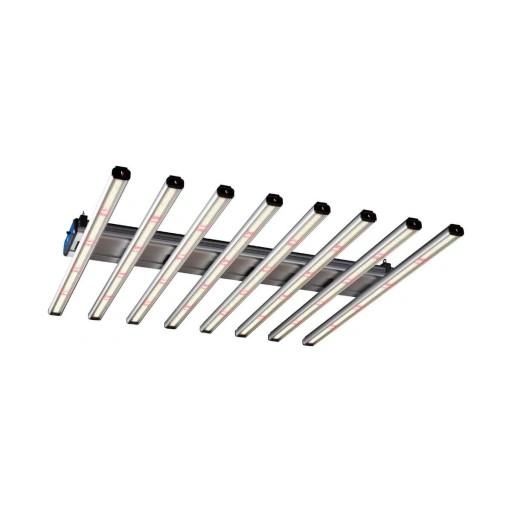
The Model-H is a high performance LED grow light for the horticulture cultivation. It is designed specifically for high PPFD cultivation practices in vertical farming. Full spectrum design with spectral tuning capabilities cover each critical phase of growth from vegetative to flowering.
ThinkGrow is brought to you by the same company making TrolMaster controls -- currently one of the most sophisticated digital environmental controls on the market. ThinkGrow LED lights are also fully compatible with TrolMaster controllers with up to 256 lights being able to be controlled per digital channel.
Fluence SPYDRx PLUS LED Grow Light
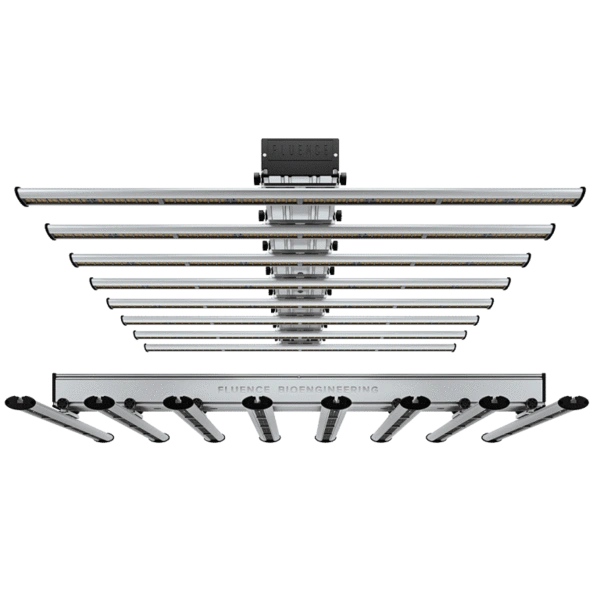
SPYDRx PLUS is designed for full-cycle commercial cannabis cultivation with the power to scale from vegetative growth to bloom. For optimal results, we recommend CO2 supplementation between 800-1400 ppm due to high PPFD levels. Also designed to cover a 4’x4’ area at only 6 inches above canopy, SPYDRx PLUS delivers an average of 1030 µmol/m2/s of light over your crop with unparalleled uniformity.
ECO Farm GLT 500 Dimmable Samsung LM301B Grow Light
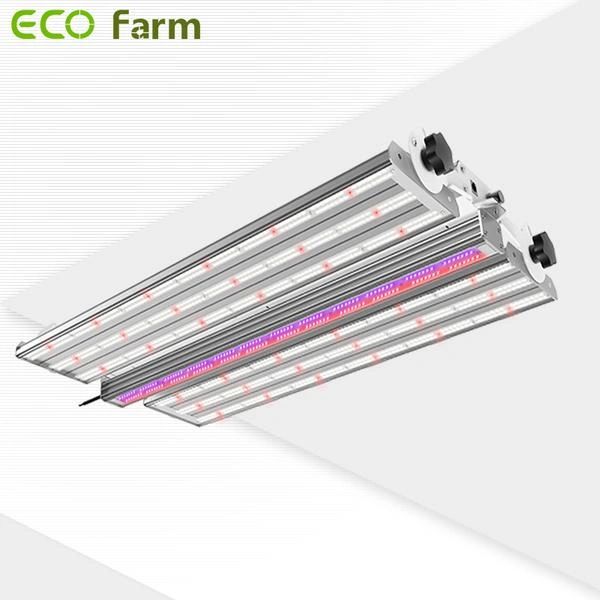
Eco Farm Commercial Indoor LED grow light uses our custom designed full-spectrum high efficiency 1560 LM301B white chips+36 Osram 660nm Red chips.
50W Enhanced Bar with UV(25W) and Far red(25W) optional.
Far-red light causes plants to stretch out and reduces the amount of chlorophyll (which is essential for plant growth) in leaves. When used for a short period, far-red light can stimulate flowering.
UV-B can induces a range of strong morphological effects in plants, including leaf thickness, leaf discoloration, cotyledon curling, inhibition of hypocotyl growth, stem and leaf elongation, axillary branching etc.
Kind LED X² Commercial LED Grow Light
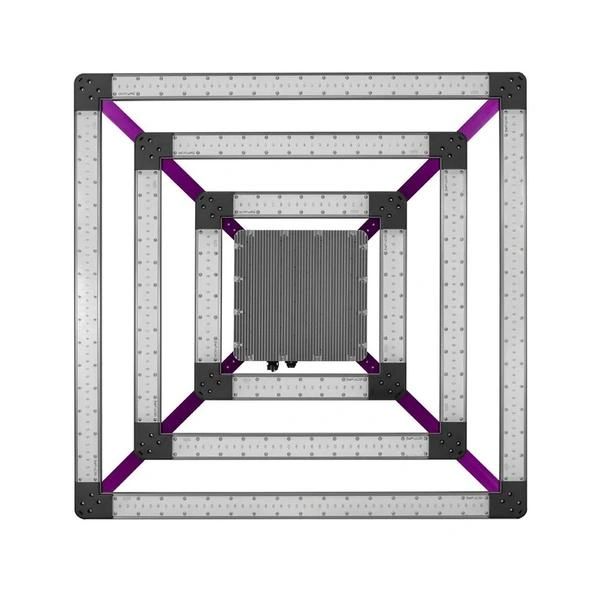
Developed as the perfect solution to vertical racking and overhead grow operations, the X² commercial LED grow light from Kind LED was specifically designed for close-proximity growing, capitalizing on valuable tiered growing space while maintaining a large coverage footprint and tremendously even PPFD output. This means increased harvest weight and quality, and unmatched potential for financial returns at harvest. Discover the future of commercial LED grow lights today!
Replies