7 Debunked Myths About Contraception You Shouldn’t Believe In
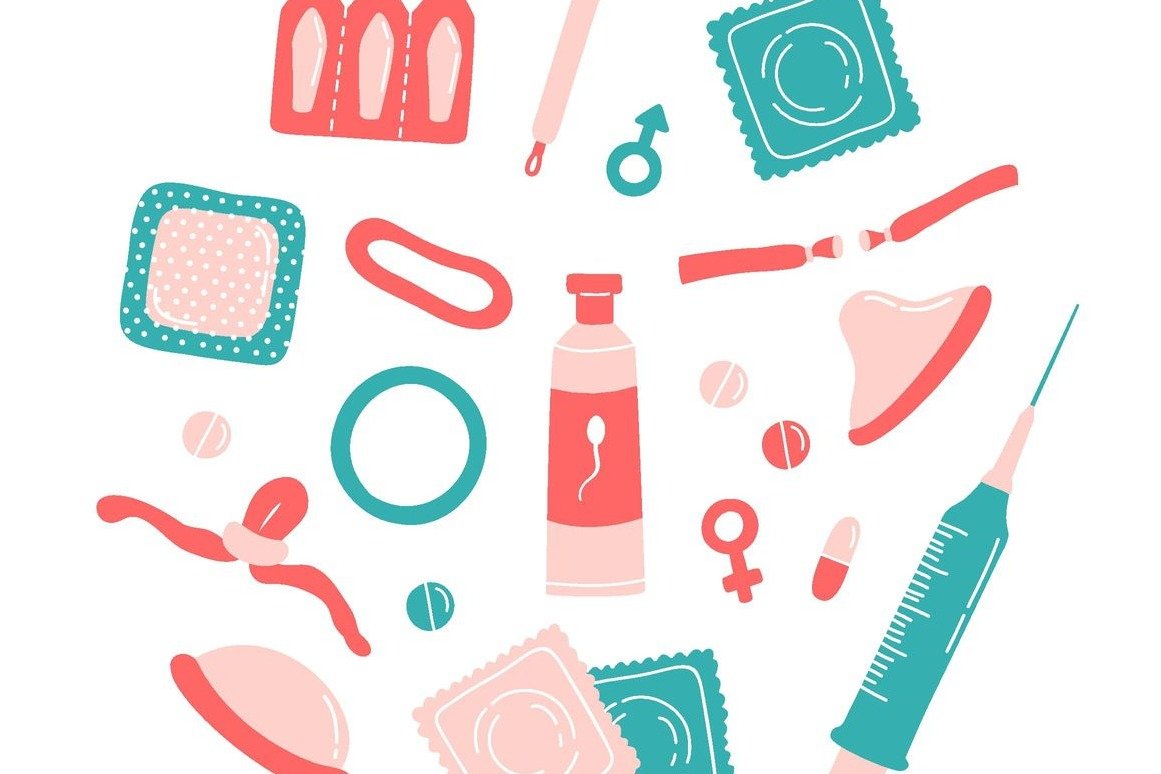
There are two main types of contraception, barrier (non-hormonal) and hormonal. Barrier contraception doesn't let the sperm reach the uterus while hormonal contraception suppresses ovulation. Even though there is a lot of information about contraception, people still spread some myths and misconceptions about birth control. In this article, we have gathered seven debunked myths about contraception you shouldn't believe in.
1. All types of contraception prevent STDs
It is essential to understand that all hormonal contraception and most types of barrier contraception are designed to prevent pregnancy. Additionally, STDs can be transmitted through blood and other body fluids. So the only contraception option that can help decrease (but not eliminate) your risk of getting STDs is a condom (male or female). Unfortunately, the only way to completely avoid STDs is sexual abstinence.
2. Hormonal contraception causes infertility
Many women don't consider hormonal contraception as a birth control option since they think that it can cause infertility. But the reality is that the effect of hormonal contraception is temporary and many women have gotten pregnant when they skip or end the intake of hormonal contraceptives. Moreover, there are certain conditions causing fertility problems (like uterine fibroids and PCOS) that are managed with the help of hormonal contraception.
3. You can't use a few types of contraception at once
There is a common misconception that there is no need to use several contraceptives at once. But you should understand that none of the contraceptive methods provides 100 percent protection against pregnancy and STDs. So if you have an implant or take birth control pills, it is still better to use condoms during sex. This will not only help protect you from STDs, but also decrease your risk of getting pregnant, especially if you have skipped a pill or are late with a ring, implant, or shot.
4. You can buy birth control pills anytime you want
Indeed, most drugstores can offer you a huge variety of birth control pills. But the point is that you should know for sure what type of birth control pills you need exactly. There are combination and progestin-only pills. That's why you still need to consult a gynecologist beforehand. A professional doctor will examine you and prescribe birth control pills that will meet all your needs.
5. There is no need to use condoms during periods
Many people believe that a woman can't get pregnant from unprotected sex when she is menstruating. Indeed, the chances to conceive are lower during periods but never zero. The point is that the sperm can remain active for five days in a suitable environment (like the female reproductive system). If a woman starts ovulating during these five days, she can easily get pregnant.
6. Withdrawal method of contraception is quite effective
It is important to understand that a withdrawal method of contraception doesn't guarantee any protection against pregnancy. A small amount of sperm can be released throughout the sexual intercourse and even this amount can be enough to fertilize the egg. Additionally, a withdrawal method doesn't protect you from STDs. As mentioned above, many infections and viruses can be passed through body fluids and even skin-to-skin contact. That's why it is better to combine using condoms with a withdrawal method of contraception.
7. You should use condoms only during vaginal sex
Some people think that STDs can be passed only through unprotected vaginal sex. But you should know that unprotected anal and oral sex can also be a way to get STDs. If you want to save yourself from these infections and viruses, it is better to use condoms during any type of sex.
Replies