5 Intriguing Spinal Decompression Methods
Back pain affects 80% of Americans at some point in their lives, making it one of the world's most serious health issues. Whether you're in pain or not, understanding the various methods of spinal decompression will be an advantage for your entire physical and emotional wellness.
Here are five uncommon but very helpful methods to decompress your spine, which is especially crucial if you have problems with your neck, upper back, or lower back:
1. Exercise in water
When it comes to low back and neck problems, switching your exercise program from land to water will generate excellent health benefits.
This type of exercise can be beneficial for persons suffering from osteoarthritis, advanced osteoporosis, muscle strains, or tears (who may struggle to exercise on hard ground or even padded surfaces).
Water has three therapeutic properties:
- Buoyancy – the ability to defy gravity and support our weight. This is fantastic for developing better balance and strength.
- Viscosity – water creates moderate friction and resistance, enabling training and conditioning.
- Hydrostatic pressure - when you exercise in water, you improve lung function while also increasing muscle blood flow.
2. Visit a chiropractor
Considering the health benefits, visiting a chiropractor is highly popular. Many people seek spinal manipulation from a chiropractor if they are suffering from ailments such as sciatica, neck discomfort, headaches, or low back pain.
Those who received chiropractic care in addition to standard care improved more quickly in terms of low back pain intensity and pain-related impairment than those who only received medical care. When conducted by a certified and trained practitioner, it is relatively safe, with minor side effects like muscular soreness, stiffness, or a short increase in pain.
3. Nonsurgical decompression therapy
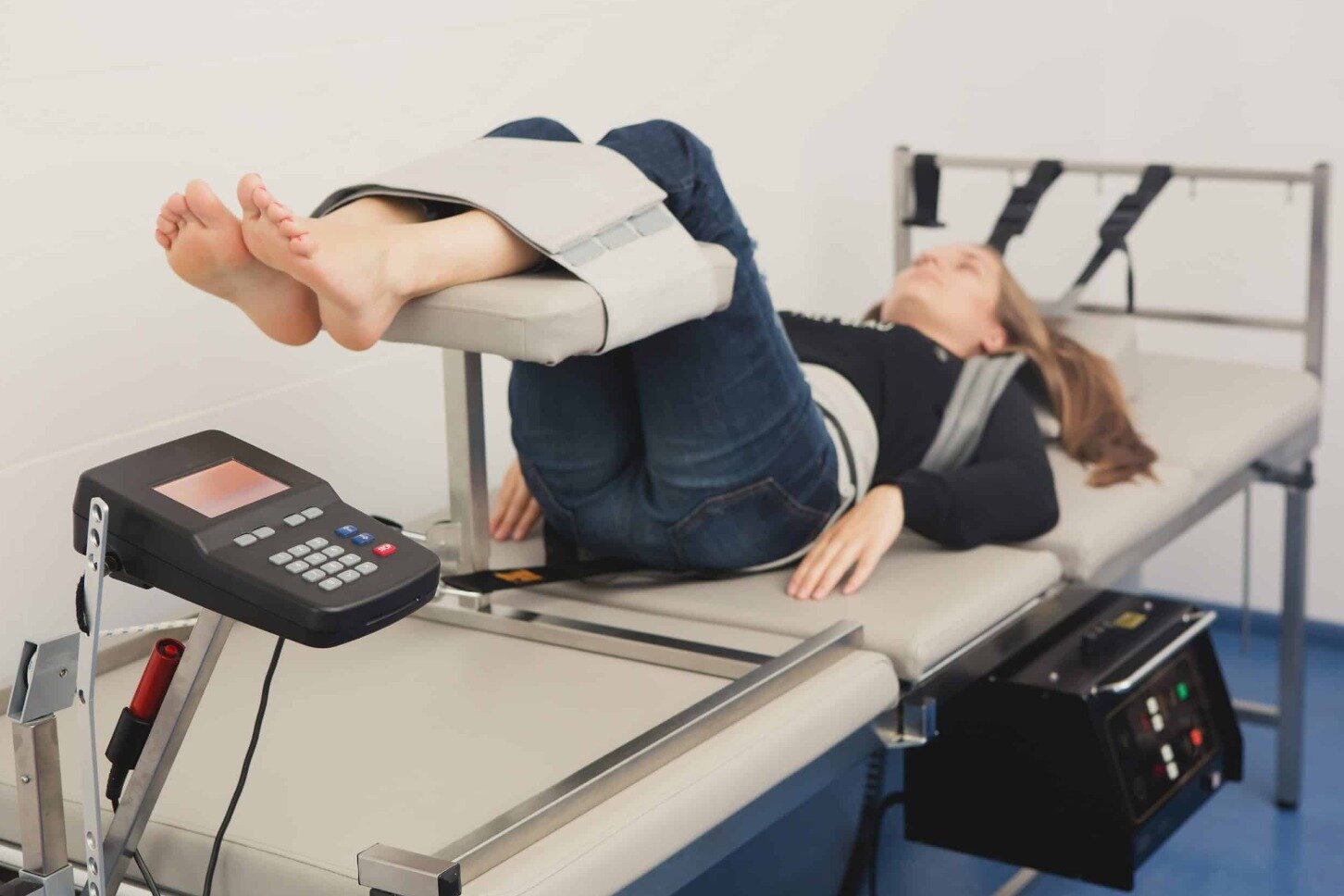
This technique moves your head away from your neck to allow for expansion and decompression. Stretching lightly the neck relieves pressure on the spine by separating the vertebrae. Cervical traction is typically performed as part of physical therapy treatment, or it can be done at home with a particular device, but some may necessitate a prescription.
In addition to cervical traction, spinal traction is used to treat pinched nerves, herniated discs, sciatica, degenerative disc disease, and a variety of other back disorders.
There are two types of spinal traction:
- Manual spinal traction - your physical therapist applies manual tension to joints and muscles to expand spaces between the vertebrae.
- Mechanical spinal traction - a physical therapist will use particular instruments to release pressure while you will lying on a table.
Although no long-term negative effects have been observed, you may feel muscle spasms and soreness in the treated areas.
It is critical to consult with your doctor so that they can assess your medical history and offer the best treatment for you.
4. Inversion therapy
Inversion therapy is another type of spinal decompression therapy that you can practice at home.
It entails hanging upside down on a table to stretch the spine and relieve back pain.
Using this spinal decompression gadget, you can change the body's gravity, relieving strain on the back and increasing the space between the vertebrae.
The zero-gravity nature of inversion reduces compression and can even prevent disability from back problems, reducing the need for surgery.
5. Spinal decompression surgery
After exploring all other options, you may want to try or be advised to undergo spinal decompression surgery.
It may be beneficial for patients suffering from acute pain caused by squeezed nerves.
People who struggled to walk before surgery, for example, can generally walk for longer and with greater ease after surgery.
You should be aware that the immediate benefits you experienced following the operation may fade over time.
Infection, blood clots, bleeding, an adverse reaction to anesthesia, and nerve or tissue injury are all common hazards with this type of surgery.
Some argue that there is a risk that it will not improve back pain and that it is difficult to determine who will benefit the most.
Replies